
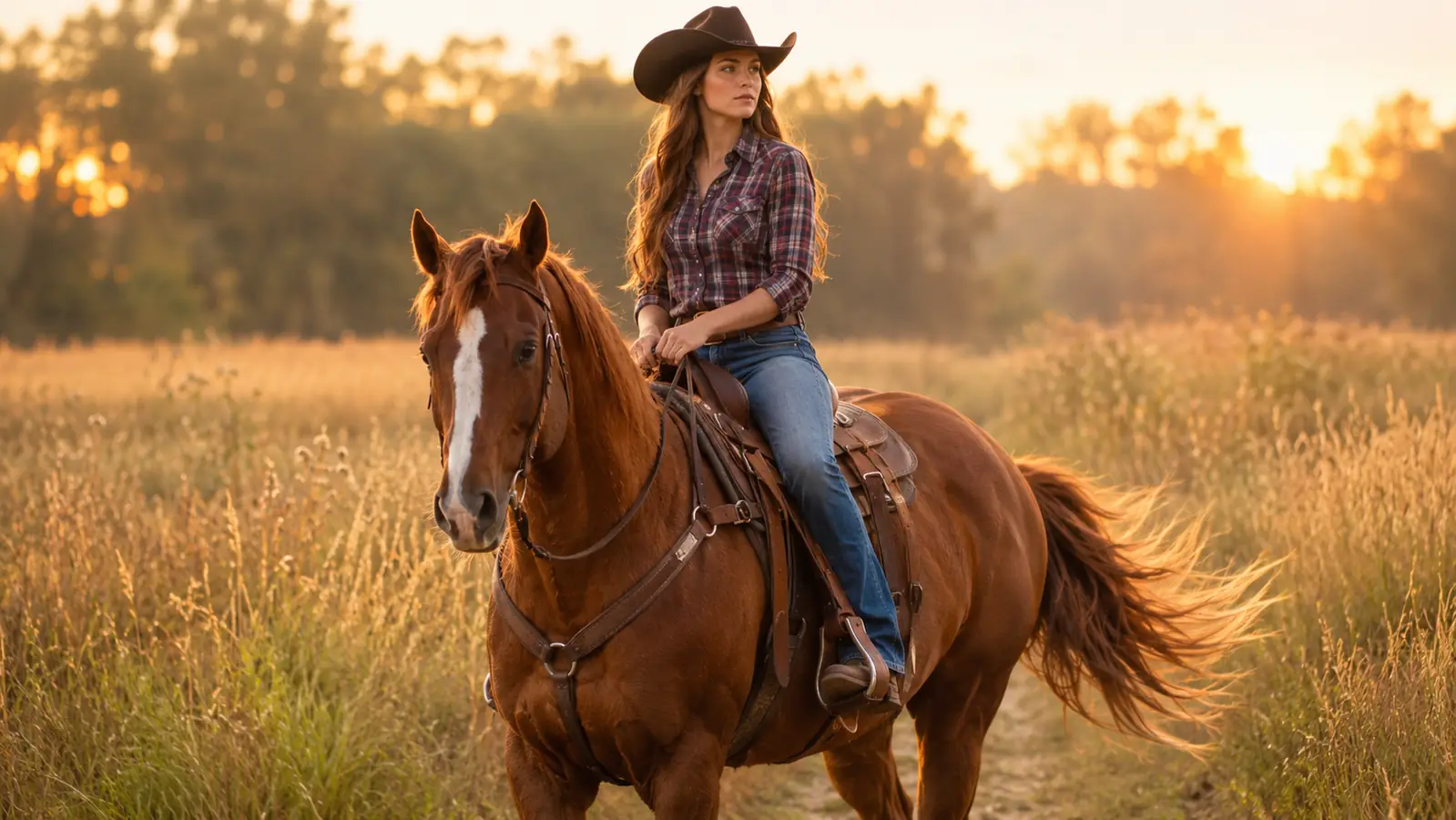
The first fly of the season always shows up the same week I finally get my tack cleaned. By the second week of June, Dusty is stomping in the cross ties with his tail going like a metronome, and I am swatting my own neck while I try to pick out his hooves. If you keep a horse at home, you know the routine. Flies are not a nuisance you swat and forget. They are a management problem, and by August they have cost you riding days, sleep, and more than one horse that comes in with his legs chewed up.
I have tried the homemade brew with the dish soap and the vinegar. I have tried the wipes, the roll-ons, the garlic crumbles, and the traps that fill up with black soup by the Fourth of July. Some of it helped. Most of it was gone before I got the girth tightened. What has actually held up for me, summer after summer, is Absorbine UltraShield EX, and the bigger lesson is that the spray is only half the job. The other half is how and when you put it on. Get the routine right and a bottle goes further than you expect. Get it wrong and you will be respraying every morning, wondering why nothing works.
The bottle is the easy part. The routine is what keeps them off.
Absorbine UltraShield EX comes ready to use in a 32 fl oz sprayer. The label lists 70+ species of insects, including flies, mosquitoes, ticks, gnats and ants, with protection up to 17 days from UltraBond Technology. It is a water-based formula built for horses, ponies, dogs, barns and premises, and it carries sunscreens and coat conditioners along with the pyrethrins.
Amazon Check Today's Price on Amazon →Step 1: Start Before the Flies Do
The mistake I made for years was waiting until the flies were already bad. By then the horse is irritated, the flies have a routine of their own, and you are spraying a moving target that has already decided he does not want to stand still. The label gives up to 17 days of protection, and that number only means something if you start the clock before the population explodes.
In western New York that means the first warm stretch in May, right after the mud dries and before the stable fly shows up in force. I watch the ten day forecast and pick a morning in the fifties or sixties with no rain in it. Last year that was the fourteenth of May. Dusty was still carrying a little winter coat along the flank, so I curried him first and let him stand in the sun until he was dry all the way down. Warm weather, dry coat, no sweat along the neck yet. Not a windy afternoon when half the mist blows back into my own face. That is the window.
There is a second reason to start early. A horse that gets chewed on for two weeks learns to be difficult about being sprayed. He dances, he throws his head, and now you are fighting him instead of the flies. Start when he is calm and he stays calm. Wait until he is miserable and you will spend the rest of the summer apologizing to him with a spray bottle in your hand.
The year I tried to save a step, I skipped the May pass entirely and told myself I would deal with it in June once the barn work let up. By the first week of June there were already stable flies working the manure pile behind the run-in shed, and Dusty had chewed a bald patch the size of my palm across the top of his tail. That patch took until fall to fill back in. Now I set a note on the tack room shelf the same way I set one for the farrier, and the first pass goes on whether the flies have shown up yet or not.
Step 2: Spray in Layers, Not One Soak
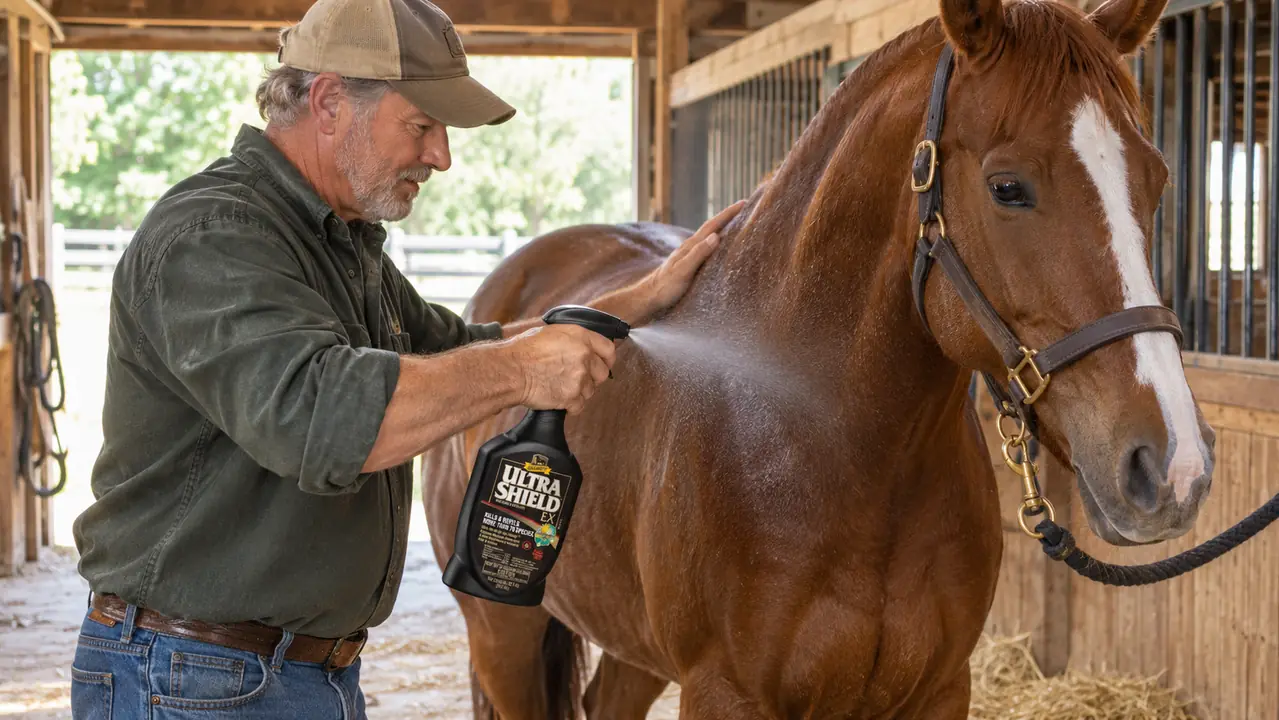
I see people empty half a bottle on one pass and then wonder why the horse is still stomping. A soaked coat runs off. A light, even mist settles in. Hold the sprayer eight to ten inches off the coat and move in slow overlapping strokes, the way you would spray a fence post, not the way you would put out a fire.
Work in sections. Neck and shoulder first, then along the barrel, then over the hindquarters. Give each section a few seconds before you go back across it. Two light passes cover better than one heavy one, and a horse is far less likely to spin away from a fine mist than from a hard stream. If he is ticklish, start at the shoulder and work back. Starting at the flank is how you teach a horse to hate the bottle.
For the face I do not spray. I spray a rag and wipe. Ears, the front of the face, under the jaw, down the bridge of the nose. It takes ten extra seconds, it keeps the product out of his eyes, and it saves you a horse that flinches every time he sees the sprayer for the rest of his life. I keep that rag in a coffee can on the shelf and I do not use it for anything else.
The whole horse takes me about two minutes, and it took me a while to believe that was enough. I timed it one morning out of curiosity with the kitchen timer on the shelf, and from the first hiss to hanging the bottle back up it was two minutes and ten seconds. What I had been doing before, the one heavy soak with a stream, took about the same time and covered maybe half as well. The difference was the nozzle turned to mist and my hand kept moving instead of stopping on one spot to let it run.
Step 3: Cover the Spots You Always Forget
Flies are not random about where they land. They have preferred real estate, and it is almost always the spots that are inconvenient to reach. The midline and sheath, the inside of the back legs, the throatlatch, the tail dock, the crest of the neck.
Lift the tail and get the dock. Get the inside of the hocks and the soft skin behind the pasterns. That is where the gnats pile up and where summer sores start. A fly that lands on the shoulder and gets a whiff of pyrethrins will leave. A fly that lands somewhere you skipped has no reason to go anywhere.
I treat the shed and the stall too. The label covers barns and premises, so I make a light pass along the wall by the door and around the tack room while the horse is turned out. Not a drenching. A quick pass in the morning, before the heat brings everything inside. Same idea as the horse: cover the surfaces, do not flood them.
The spot that taught me this was the front of the back cannon bones. Three summers ago Dusty came in with a raw, weeping spot the size of a quarter just above the fetlock, and the vet called it a summer sore and asked where I had been spraying. I said the body. She said the body is not where they land. From then on I have gone down the legs last, with the sprayer set to a fine mist and my free hand cupped below the leg so it does not run down into the hoof. Takes another minute. Worth every second of it.
Step 4: Reapply on a Schedule, Not on a Feeling
Seventeen days is a ceiling, not a promise. It assumes a dry horse in an ordinary week. Sweat, rain, a hard trail ride, a horse that rolls in the pasture, all of it eats into that number. So I do not go by the calendar alone. I go by the horse.
If he is stomping in the cross ties, swishing his tail at nothing, or rubbing his neck on the fence rail, the protection is done no matter what day it is. In the worst of the season I reapply every few days. On a dry, breezy week with the horses out and the fans running, I can stretch it. The bottle is unscented, which I appreciate more than I expected, mostly because I am the one standing downwind of it.
Ride days get their own pass. A saddle and pad rub product off across the back and the girth area, and that is exactly where a horse gets chewed on a trail ride. I spray after the horse is tacked, not before, and I hit the places the tack does not touch. If it is hot and he is sweating, the bottle goes in the trailer with me. A long ride is a reapplication, whether you planned one or not.
The ride that made this a rule instead of a suggestion was a Saturday in July on the state forest trails, about three hours in ninety degree heat. Dusty sweated through the saddle pad by the halfway point and I had not brought the bottle. By the time we loaded up, he had a line of fly bites across his loin where the pad had rubbed, and he was cranky for two days afterward. There is a thirty two ounce sprayer in the tack compartment of the trailer now, next to the hoof pick, and it does not come out for anything except spraying him.
Step 5: Make It the Easiest Thing in the Morning
The routine that survives is the one with the least friction. My sprayer lives on a shelf in the tack room at shoulder height, with a rag beside it in a coffee can. I spray Dusty while he eats his morning hay. He is busy, I am done in two minutes, and nobody has to be caught, tied, or talked into anything.
Store the bottle out of the sun. A sprayer that sits in a hot trailer or on a fence post all summer is a sprayer that clogs, and a clogged nozzle puts out a stream instead of a mist, which is the fastest way to make a good horse difficult. I run warm water through the nozzle at the end of the week and test the pattern on the gravel before I point it at him. If the spray comes out in a line instead of a cloud, the nozzle is blocked, and no amount of shaking the bottle will fix that.
If you board, this is the part you have to negotiate. Some barns want the owner to handle it. Some will do it for you if the bottle is labeled and kept in the right spot. Either way, get it settled in May, not in August when everyone is short-tempered. A bottle sitting on a shelf in the barn office is not protecting anybody.
What Else Helps
Spray is one layer, not a wall. The horses I see with the least trouble are on a whole program, and none of it costs much.
Manure is the first thing. Two horses produce more than you expect, and a pile beside the barn is a fly nursery. I pick the paddock every morning in season and haul it well away from the buildings. Fly predators help if you start them early and keep them going all summer. Traps catch what is already there, but they will not rescue a wet, dirty run-in shed.
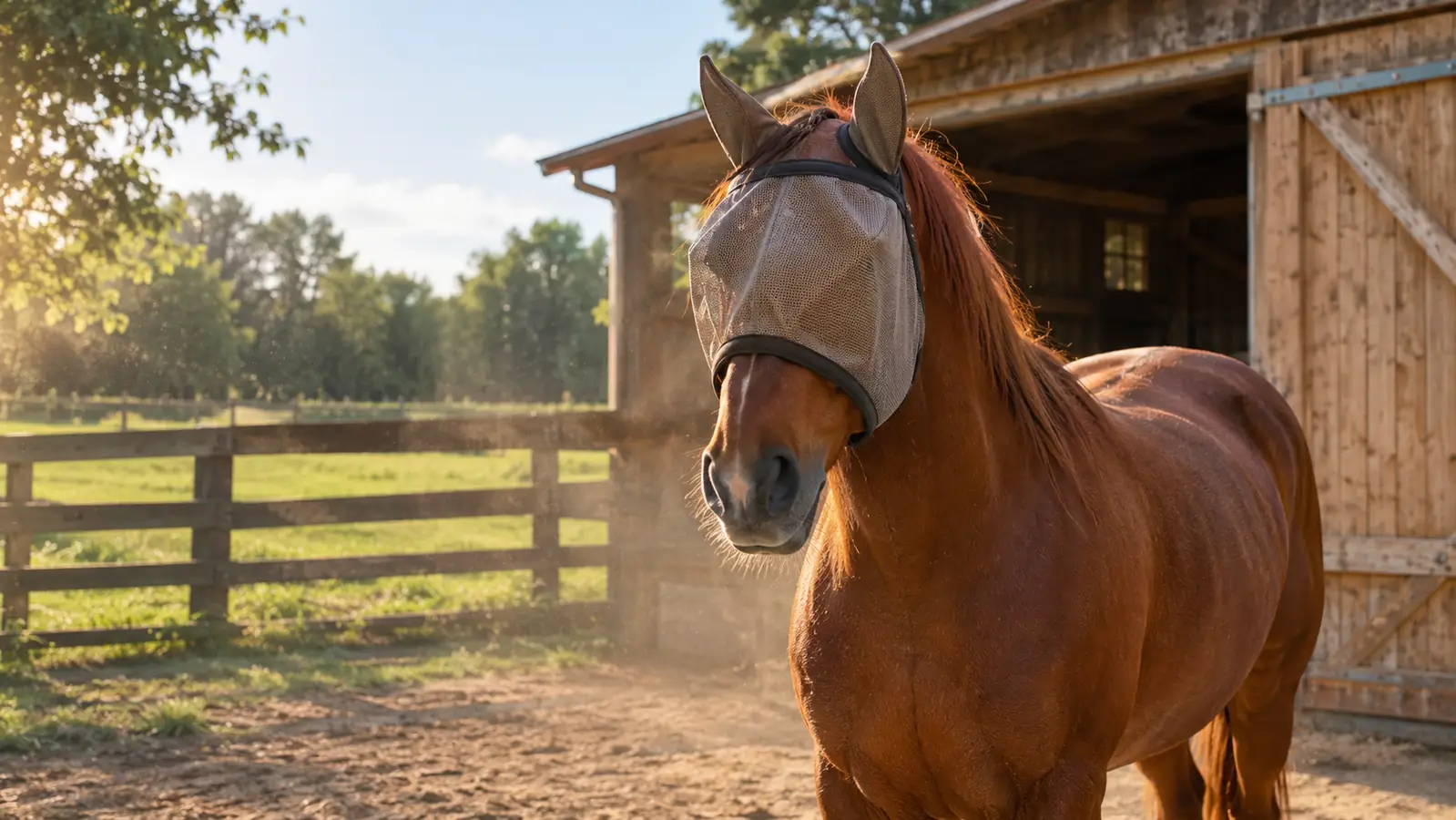
Airflow matters more than people give it credit for. Flies are weak fliers, and a fan moving air through a stall does real work. Fly masks and fly sheets earn their keep on horses that live outside. Leg wraps help the ones that get chewed below the knee. I also scrub the water tubs, because standing water is where the mosquitoes come from.
What did not work for me: garlic crumbles, the vinegar and dish soap brew, and the little ultrasonic gadget I bought one August out of pure frustration. I am not going to tell you they are useless for everyone. I will tell you that on my place, with my horse, they did not change the math.
Seventeen days on the label is a ceiling, not a promise. If he is stomping in the cross ties, the protection is done, no matter what the calendar says.
The flies are coming either way. Decide now what you are spraying.
Absorbine UltraShield EX, 32 fl oz, ready to use. The label lists 70+ species, protection up to 17 days with UltraBond Technology, and sunscreens and coat conditioners in a water-based formula for horses, ponies, dogs, barns and premises. Keep a rag in the tack room and a routine in your head.
Amazon Check Today's Price on Amazon →