
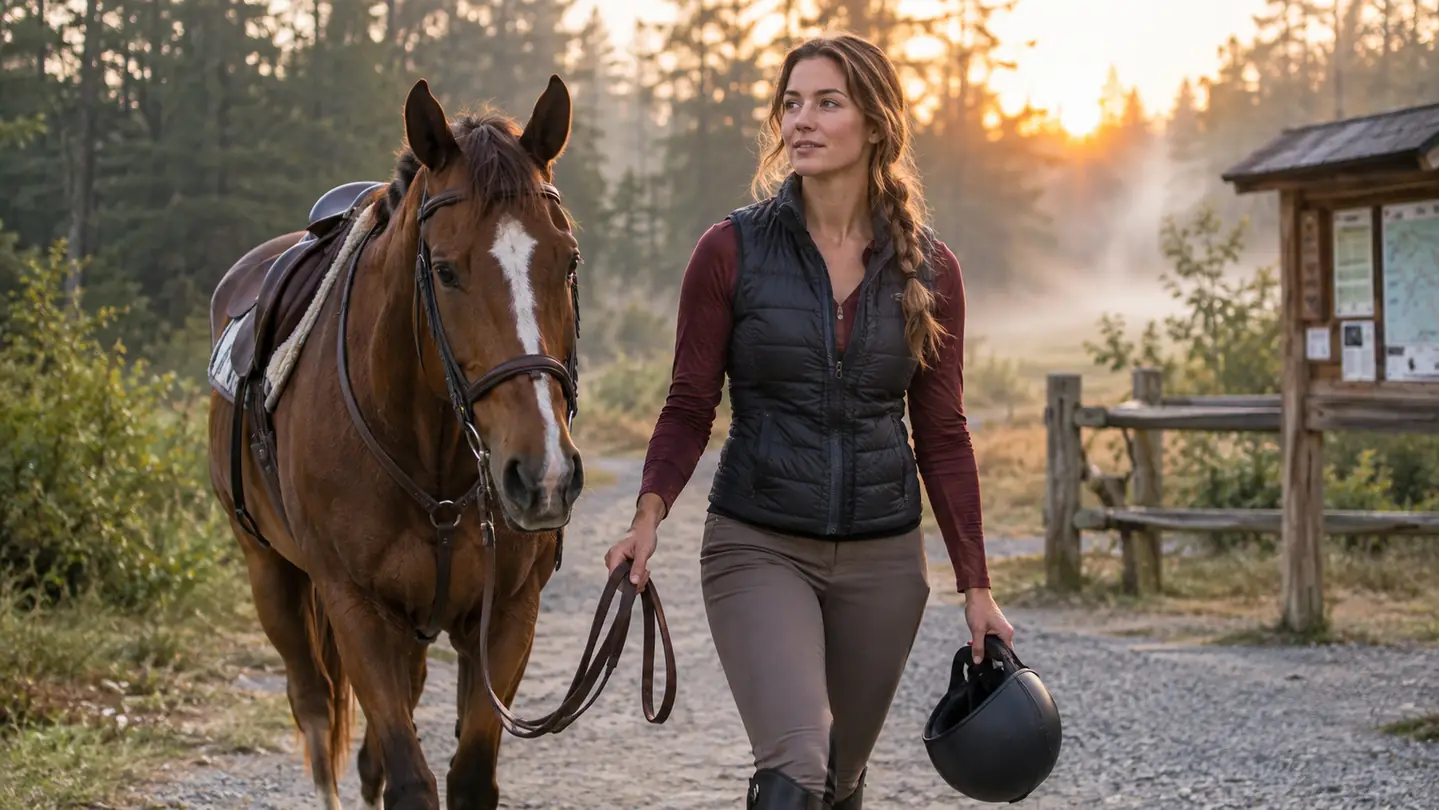
The first thing that happens when a riding helmet comes out of the tack room in July is a small argument with yourself about whether you really need it. I have had that argument on the tailgate of my trailer more times than I can count. Western New York summers are thick and buggy, and by the time I have walked Dusty in from the pasture, brushed him off, saddled up and hauled to the trailhead, the last thing I want is a shell clamped down over my ears.
I bought the Troxel Spirit anyway, back in the spring. A neighbor's girl came off her gelding on a gravel road in April and spent an afternoon in the emergency room waiting on a scan, and I ride alone more often than not. That was the whole reason. Nobody talked me into it and I did not read a hundred reviews first. I measured my head the way the sizing chart said to, ordered it, and set it on a shelf in the tack room next to the lead rope. I have put a full season on it since, from frozen ground in April through the sticky stretch in August, and I have opinions now.
The Quick Verdict
Light enough that I forget I have it on, vented enough that I stopped dreading July, and the adjustable fit has not shifted once all season. The visor is small and the sizing runs snug. I would buy it again tomorrow.
Amazon Check Today's Price →The Helmet I Reached For Every Trail Morning This Season
One season, three rides a week, no loose straps and no aching ears. If you want the same Troxel Spirit I keep grabbing off the tack room shelf, here it is.
Amazon Check Today's Price on Amazon →How I've Used It
Most of my miles are slow miles. Weekend trail rides on back roads and the state forest trails about twenty minutes from the barn, a couple of fun-show classes at the county grounds in June, and a lot of walking out on days when the ground was too wet to do anything else. That is what this helmet has seen. Roughly three rides a week from April through the end of September, an hour or two at a stretch, plus one long haul to a friend's place over in the next county where we rode four hours and I never took it off. I am not a competitor. I am a woman with one horse, a two-horse trailer and a full-time job who rides when the daylight and the weather allow.
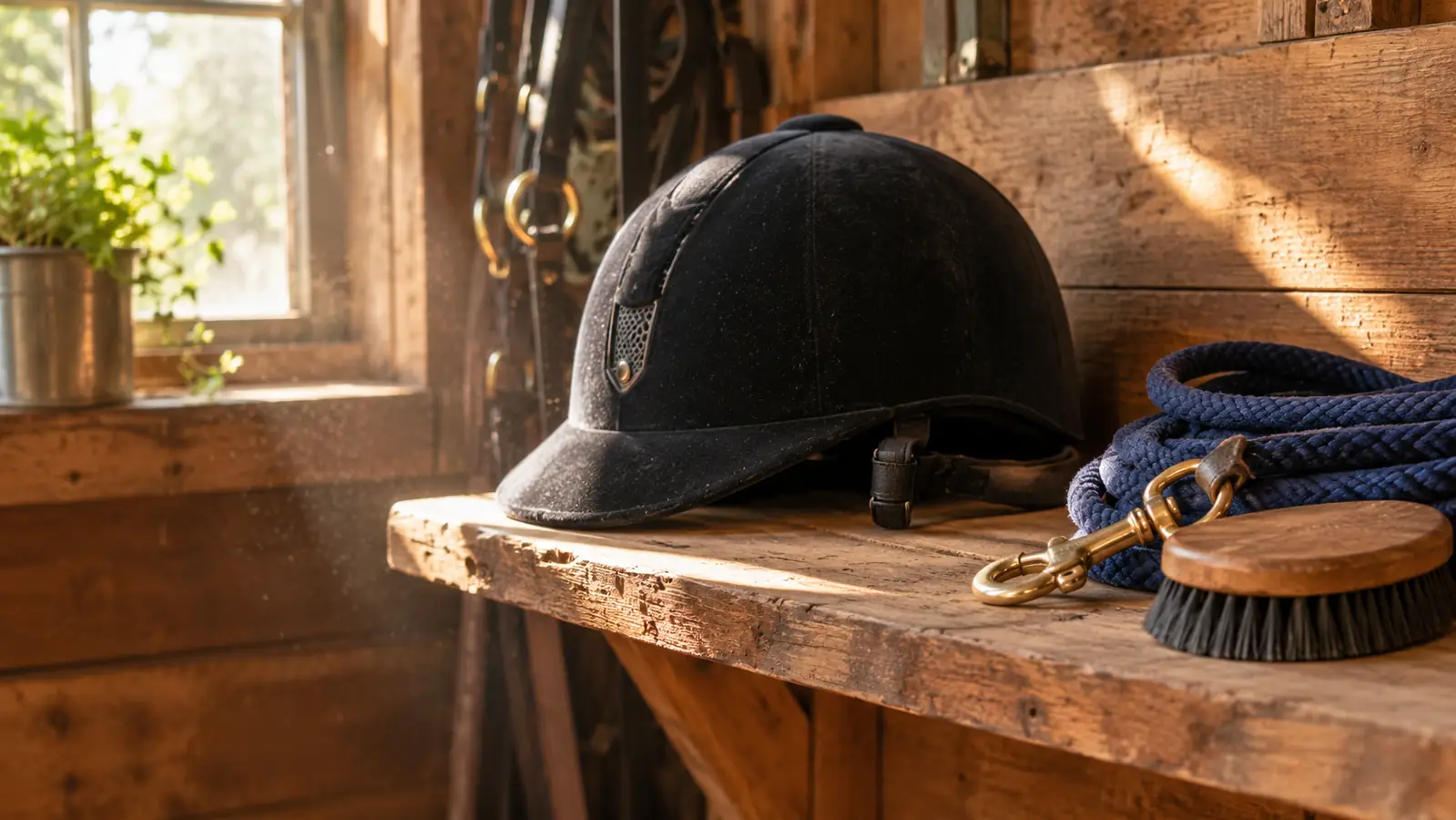
It lives on a shelf in the tack room I built into the wall myself, next to the lead rope, which means it gets grabbed and dropped a dozen times a week. I wipe the inside down with a damp cloth after a sweaty ride because that is the only cleaning I have figured out that does not involve taking anything apart. Twice this summer I set it down on gravel while I dealt with a gate, and it has the scuffs to show for it. Nothing has cracked. Nothing has come loose, and the strap still holds exactly where I set it in April.
The part I did not expect is how quickly I stopped thinking about it. A helmet that fits wrong is a constant low-grade annoyance. You notice the brow pressing, you notice the strap under your chin, you notice the weight at the end of a long ride. Some helmets I have owned made my ears ache by the second hour. This one did not, and by the second week I was getting off after two hours and realizing I had not touched it since I put it on. That is the highest compliment I can pay a piece of gear.
What the Spirit Is Actually Built From
The shell is polycarbonate, which is the hard outer layer you can knock on with your knuckles, and the inside is expanded polystyrene, which is the foam. That combination is what most everyday riding helmets use, and it is worth understanding why. The hard shell spreads a hit across a wider area instead of letting it land in one spot, and the foam crushes to slow the impact down before it reaches your head. Neither piece works alone. It also means the helmet is a one-hit item. A cracked shell or a liner that has taken a real knock means it has done its job and needs replacing, even if it still looks fine sitting on the shelf.
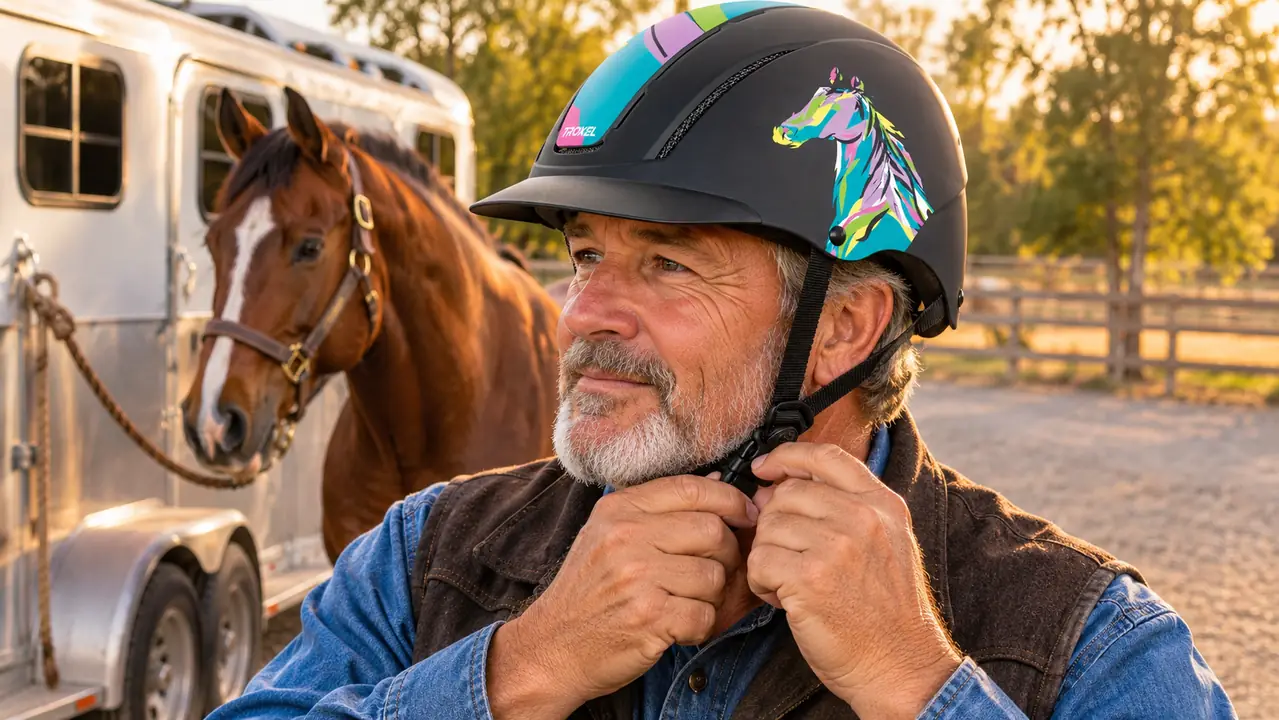
Troxel builds this one with what they call Duratec full coverage, which in plain terms means the shell comes down further around the back of the head than a minimal schooling helmet does. I can feel that when I tip my head back to look up a slope, or when I duck under a low branch on the trail. There is coverage back there instead of open air, and on a horse that spooks at a deer, that is worth something. The helmet weighs 0.76 kg. The low-profile shape means it does not sit up high and top-heavy the way some fuller helmets do on a smaller head.
The vents are placed across the top and around the sides, and there is a visor on the front. The whole thing carries a Limited One Year Warranty. The vents are the part that matters most to me, and the visor is the smallest piece of the design and the one I have the most to say about further down.
The Fit Question, and Why It Matters More Than the Spec Sheet
The Spirit is an adjustable fit helmet, sized Small in what I ordered, and the shell measures about 13 by 9.25 by 8.25 inches. Numbers like that tell you roughly how much helmet is going on your head. They do not tell you whether it will fit your head, and no listing anywhere can. The adjustable fit gives you room to work with, but it is not a substitute for measuring. If you take one thing from this review, take that.
What I did was wrap a soft tape around my head just above the eyebrows, twice, on two different days, and write both numbers down. Then I ordered, and I adjusted the fit once, in the tack room, with my hair down the way I actually wear it, and I have not touched it since. The chin strap sits where a chin strap should and stays there through a whole ride. I have friends who fight with a strap that creeps up all afternoon and have to stop and fix it. That has not been my experience with this one.
If you land between sizes, my honest advice is to find a saddle shop or a feed store that stocks helmets and try one on before you order. Barring that, order from somewhere with a real return policy and give yourself a week of wearing it around the house before you commit. A helmet you resent wearing is a helmet that stays on the shelf, and a helmet on the shelf is worse than no helmet at all, because you bought the idea of safety and did not get any.
Ventilation on a Sticky August Trail
I want to be fair here, because I complained about helmets for years. The vents on this one do something. In August we had a stretch of afternoons in the high eighties with humidity you could wade through, and I rode in it, because the alternative was not riding. On the long shaded climb up the back side of the state forest, where there is no breeze and the deer flies are committed, my head stayed cooler than it does in a ball cap. I did not believe that would be true when I ordered it.
The moment that sold me came on a ride in early August. We came off the trail, I untacked Dusty, hosed him off, and I realized I still had the helmet on. Every other helmet I have owned came off the second my boots hit the gravel. That is not a spec sheet number. That is the whole review, really, and everything else in this piece is just detail around it.
Cold Mornings and What Fits Underneath
Our season starts cold. April mornings here can be thirty-five degrees with a wind coming across the fields, and I am not tough enough to ride bareheaded in that. A thin synthetic beanie fits under this helmet without lifting it up off my head or shoving the brow down over my eyes. A bulky knit hat does not. If you force a thick hat under it, you change the fit, and a changed fit is a helmet that is not sitting where it was designed to sit. My rule is a thin layer or nothing at all.
The same goes for hair. I have long hair and I put it in a low braid, because a high ponytail changes how a helmet sits on the back of the head. That is true of any helmet and not a knock on this one. It is just the thing nobody tells you when you are buying your first one online, and it took me a couple of helmets to learn it.
Where It Falls Short
The visor is small. If you are riding into a low evening sun on a west-facing road, which I do about twice a week on the way home, it does not shade your eyes the way a wide brim does. I have taken to wearing sunglasses on those rides, which works fine and which I probably should have been doing anyway. Some riders will not care at all, because they want a traditional look and not a sun hat. I care a little.
The sizing runs snug, which is a good thing in a helmet and a nerve-wracking thing when you are ordering online with no way to try it first. I also have not found an easy way to clean the inside beyond wiping it out, and after a season of summer riding it could use more than a wipe. That is my one real gripe about the upkeep, and it is a small one.
And while this is a perfectly good helmet for the riding I do, if I were showing in rated classes I would check the rulebook before assuming it is allowed, because that is not something I can tell you from experience. I wear mine to fun shows at the county grounds and out on public trails. That is the scope of what I can vouch for.
What I Liked
- Ventilation that actually works on humid August rides
- 0.76 kg, light enough that I forget it is on
- Adjustable fit held its setting all season without creeping
- Full coverage around the back of the head thanks to the Duratec shell
- Polycarbonate shell over an expanded polystyrene liner
- Limited One Year Warranty
Where It Falls Short
- The visor is small and does not shade low evening sun
- Sizing runs snug, so ordering online takes nerve
- The interior is not easy to clean after a sweaty season
We came off the trail, I untacked the horse, and I realized I still had the helmet on. Every other helmet I have owned came off the second my boots hit the gravel.
Who This Is For
This is a helmet for the rider who does most of her miles at a walk and a trot on back roads and public trails, rides alone a fair amount, and wants one helmet that goes from the trailer to the trailhead without fuss. It suits a pleasure rider who wants coverage around the back of the head, a light shell, and vents that work in real summer humidity. It suits someone who keeps a helmet on a shelf in a tack room and grabs it three or four times a week, the way I do. If you want one piece of headgear for trail rides, fun shows and the occasional long haul to a friend's place, the Troxel Spirit covers all of that.
Who Should Skip It
If you ride into the sun a lot and want a brim that shades your eyes, look at a helmet with a wider visor. If you are between sizes and are not willing to try one on or use a return policy, wait until you can. If you have a head shape that has fought every helmet you have ever bought, this may not be the one that solves it, and no review from me can promise otherwise. And if you already own a helmet you like that fits your head well, there is no reason to replace it just because this one reviewed well. A helmet is a personal fit item first and a piece of gear second. The one that fits your head and that you will actually wear beats the one with the better write-up every time.
One Season In, and It Still Lives on the Tack Room Shelf
If you are shopping for the helmet a trail rider actually reaches for, this is the one I put a season on. Measure your head first, then go look at today's price.
Amazon Check Today's Price on Amazon →