
If you are trying to choose between the Troxel Spirit and the Troxel Liberty, here is the short version. The Spirit is the helmet I reach for when I want full coverage and a visor on a long trail ride. The Liberty is the one I would pick for a hot day when I want less weight on my head. Both are Troxel helmets, and both are built for riders who want a real riding helmet, not a costume piece.
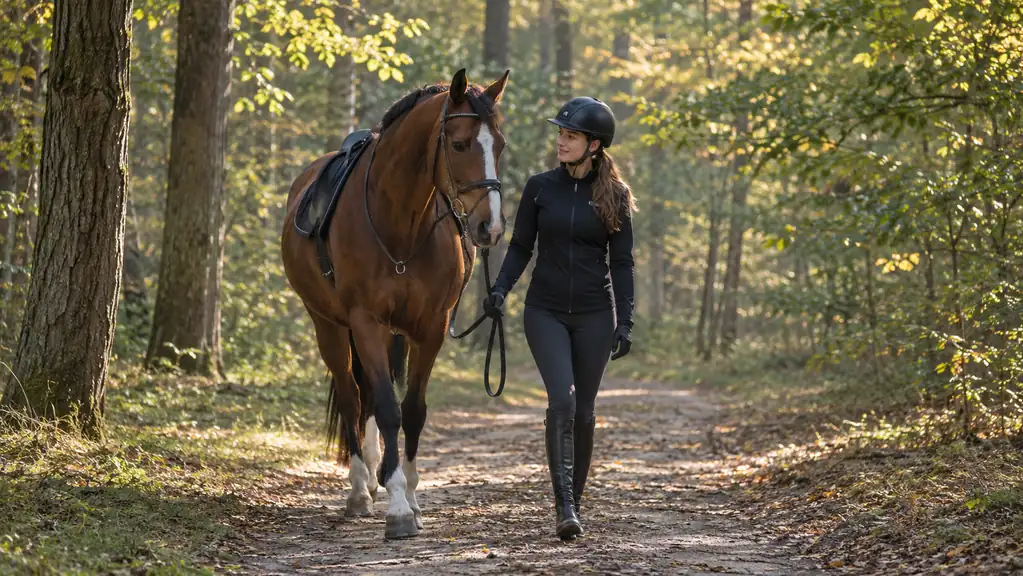
I am Shelby Hartwell. I live outside a small farm town in western New York and ride a 14-year-old sorrel Quarter Horse gelding named Dusty. We do back roads and state forest trails on weekends, and I am on the ground doing barn chores every morning with my Australian Shepherd mix, Biscuit, underfoot. I have ridden in a Spirit for two seasons. I have also put miles on a Liberty. This is how they compare on the things that matter to a trail rider.
| Troxel Spirit | Troxel Liberty | |
|---|---|---|
| Coverage | Full coverage, low-profile shell | Lower-profile schooling cut |
| Ventilation | Strategically placed vents | More open venting for hot days |
| Weight | 0.76 kg listed | Lighter in hand |
| Visor | Visor included | Visor included |
| Fit | Adjustable fit | Adjustable fit |
| Liner care | Listing does not call the liner removable | Removable washable liner |
| Warranty | Limited one year | Check the current listing |
| Best for | Trail riders who want coverage and a visor | Riders who run hot and want less weight |
How I Compared the Troxel Spirit and the Troxel Liberty
I did not test these helmets in a lab. I tested them on my own head, on my own horse, in weather that went from a cold October breeze to a sticky July afternoon. I looked at five things: fit, heat, coverage, the visor, and how much care the helmet needs after a sweaty ride. I also paid attention to weight, because a helmet that feels fine in the tack room can feel like a bucket after two hours.
I started keeping notes in a spiral notebook in the tack room, the same one I use for farrier dates and feed totals. The first entry was a Saturday in late October, about forty degrees with a stiff wind out of the west, and Dusty and I did six miles on the back road loop. The second was a Tuesday evening in July, still eighty-four degrees at seven o'clock, and we only did three miles because the deer flies were winning. Those two rides told me more than any product page could.
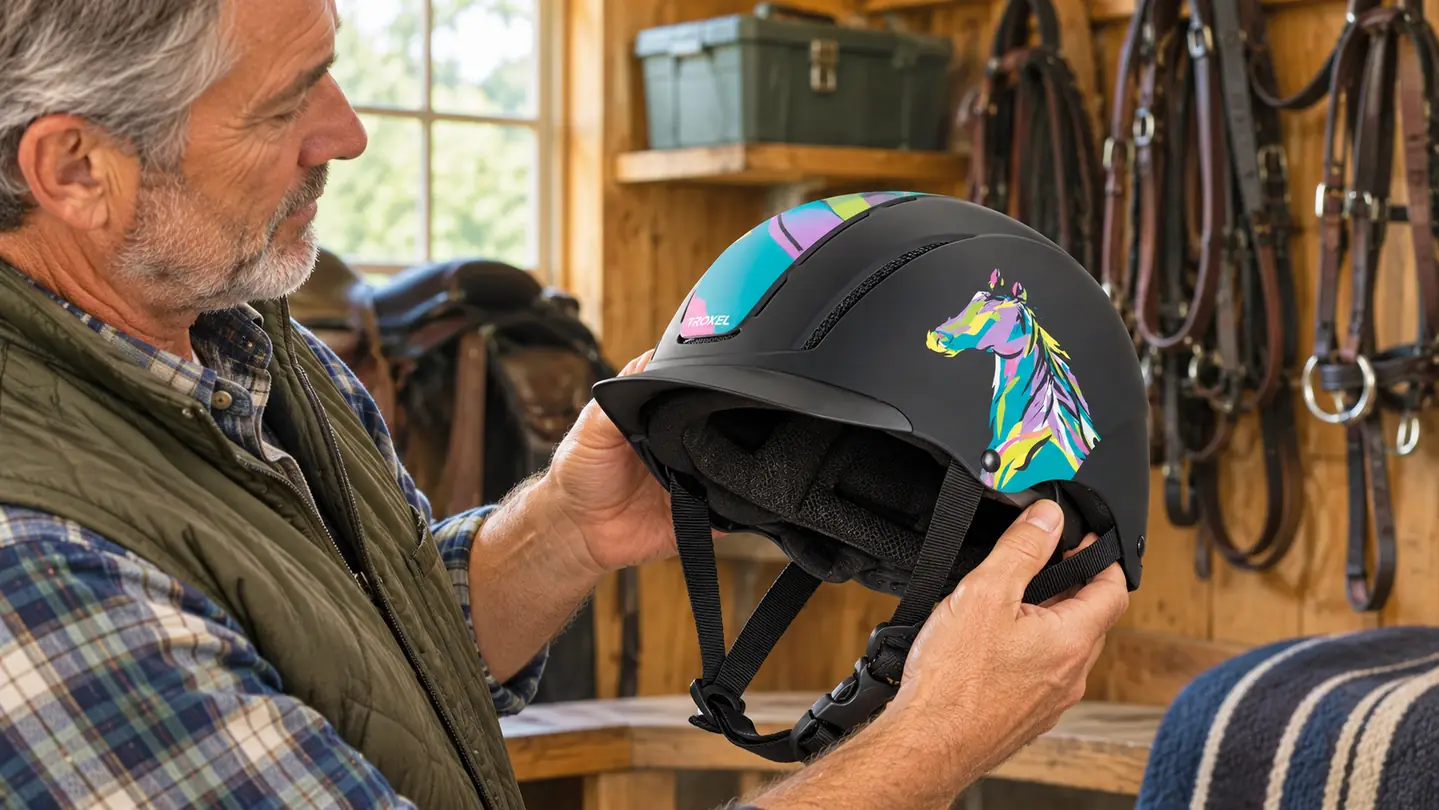
The Spirit I looked at is the Duratec full coverage model in size Small. The listing gives the dimensions as 13 by 9.25 by 8.25 inches and the weight as 0.76 kg. It has a polycarbonate outer shell, an expanded polystyrene inner liner, a visor, and strategically placed airflow vents. The design is low-profile. The fit is adjustable. Those are the facts I could check. The rest is what I felt on the trail.
What the Specs Do and Do Not Tell You
The Spirit listing is unusually clear about the basics. It tells you the shell is polycarbonate, the liner is expanded polystyrene, the weight is 0.76 kg, and the dimensions are 13 by 9.25 by 8.25 inches. It also lists a visor, airflow vents, a low-profile design, and adjustable fit. What it does not tell you is how the helmet will feel on your particular head after two hours. No listing can. That is why I care more about the shape of the shell and the fit adjustment than about a long feature list.
The Liberty listing is written for a schooling rider. It talks about lighter weight and open venting. It also points to a washable liner. Those are the right priorities for someone who rides several times a week in warm weather. The Spirit listing is written for a rider who wants coverage. It talks about the full coverage shape and the visor. Neither listing is better. They are answering different questions. The trick is to know which question you are actually asking.
Fit and Feel on a Long Trail
The Spirit sits lower and feels planted. The low-profile shape does not look like a mushroom on my head, which matters to me more than it should. The adjustable fit let me snug it down without a hard pressure point above my eyebrows. On Dusty, that matters because he is a steady horse but he is also barn-sour, and a loose helmet is one more thing to think about when he decides the gate is more interesting than the trail.
The Liberty feels lighter and airier from the first minute. If you have a hot head like I do, you will notice it. The trade is that it feels a little less substantial in the hand. That is not a defect. It is a different design choice. For a short schooling ride in July, I liked it. For a four-hour trail ride with changing weather, I wanted the Spirit's coverage.
I tried a ball cap under the Spirit first, thinking it would help with the sun. It did not. The brim pushed the front of the helmet up just enough that the fit felt wrong, and I could feel the shell rock when I posted. I took the cap off at the first gate and never put it back. The visor does the job the cap was supposed to do, and the helmet sits where it is supposed to sit.
The Spirit is not the lightest helmet I have worn, but it is the one I stop noticing once Dusty and I get moving.
Where the Troxel Spirit Wins
The Spirit wins on coverage. The full coverage design comes down lower at the back of the head, and that is the part I think about when I am riding under low branches or when the weather turns. The visor is also a real plus for trail riding. It keeps the sun out of my eyes without me having to wear a ball cap under the helmet, which never fits right anyway. The polycarbonate shell and the expanded polystyrene liner are the kind of construction I expect from a Troxel helmet, and the 0.76 kg weight is reasonable for the coverage you get.
It also wins on stable feel. The adjustable fit holds where I set it. I have not had it creep up or tilt forward on a long trot. After a sweaty ride, I wipe the inside down and set it out to dry. The listing does not call the liner removable, so I do not pull it out. That is a small annoyance, not a deal breaker. If I am choosing one helmet for mixed weather and long trail miles, the Spirit is the one I trust more.
Where the Troxel Liberty Wins
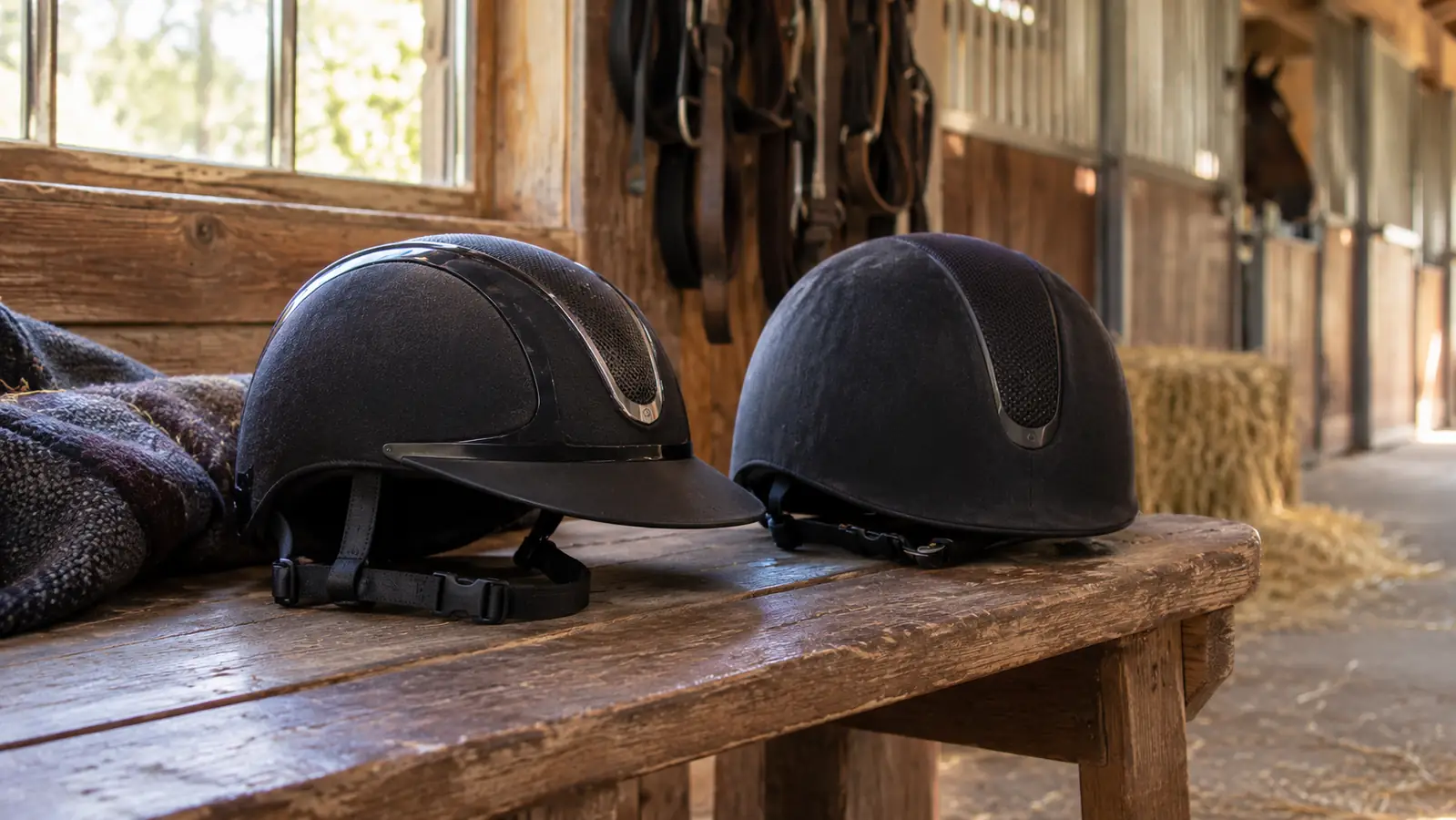
The Liberty wins on heat and weight. The venting is more open, and the helmet feels lighter on the head. On a still afternoon in the low eighties, that is not a small thing. I also like that the Liberty is simple. It is a schooling helmet in the best sense. You put it on, you ride, you come back, and you do not spend ten minutes fiddling with it.
The Liberty also wins on liner care if you get the version with the washable liner. That matters more than people admit. A helmet that smells like old barn dust is a helmet you stop wearing. The Spirit can be wiped down, but the Liberty is easier to keep fresh. If you ride five or six days a week and you sweat hard, that convenience adds up. I would still check the fit first, because a washable liner will not save a helmet that presses on your forehead.
If you want full coverage and a visor for long trail miles, start with the Troxel Spirit.
The Spirit is the helmet I reach for when the ride is going to be long, the weather is uncertain, and I want one less thing to think about. Check the size chart, measure your head, and look at the current listing.
Amazon See the Troxel Spirit on Amazon →Care, Wear and the Small Stuff
Neither helmet is a lifetime purchase. Helmet foam ages, sweat breaks down liners, and a drop onto concrete is a reason to replace, not a reason to inspect and hope. I replace mine on a schedule and sooner if it takes a hard knock. The Spirit liner is not described as removable, so I clean it with a damp cloth and a little mild soap, then let it air dry away from direct heat. The Liberty is easier in that department if you have the washable liner. That is the honest trade.
There is one more thing worth knowing about the Spirit. At 13 by 9.25 by 8.25 inches, it takes up real room. I built the shelves in my tack room myself, and the Spirit sits on the second shelf from the top with about an inch of clearance. If your trailer has a shallow tack area, measure before you assume a helmet will store flat on a hook. Mine rides in a soft bag on the floor of the dressing room, which is not elegant but keeps the visor from getting scratched.
The visor on the Spirit is useful but not a sun hat. It shades your eyes. It does not replace sunscreen. The vents on both helmets help, but no helmet is air conditioning. On a really hot day, I still pour water on my neck and ride in the shade when I can. A helmet is safety gear, not a comfort promise. I would rather tell you that now than have you expect a July trail ride to feel like a breeze.
A Word on Fit and Safety
Fit is the whole ballgame. A helmet that is too loose will tip, and a helmet that is too tight will give you a headache before you get to the trailhead. Measure around your head above your eyebrows, keep the tape level, and check the Troxel size chart. If you are between sizes, do not split the difference. Call the seller or order the size that matches the measurement. The Spirit's adjustable fit gives you some room to fine-tune, but it is not a substitute for the right size.
I measured my own head on a Sunday morning with a cloth tape, because the metal one from the shop drawer kept slipping off my hair. Twenty-one and a quarter inches around, taken twice to be sure. That put me in the Small size the listing describes, and the adjustable fit had room to snug it down from there. My advice is to measure twice, write the number on a sticky note, and keep it where you will find it. Head size does not change much, and having the number saves you from guessing at a checkout screen.
Replace your helmet after a fall or a hard knock, even if it looks fine. The foam inside is what absorbs the impact, and it does not always show damage. I replace mine on a schedule and sooner if it takes a hit. That is not a sales pitch. It is the same rule I follow with my truck tires and my horse's shoes. Safety gear has a service life.
Who Should Buy Which
Buy the Troxel Spirit if you are a trail rider who wants full coverage, a visor, and a fit that stays put. It is the better choice for changing weather, low branches, long weekends, and anyone who wants one helmet that does a lot of jobs. It is also the one I would hand to a friend who is buying her first real riding helmet and does not want to think about it again.
Buy the Troxel Liberty if you run hot, ride often in warm weather, and want a lighter helmet with more open venting. It is a good schooling helmet for daily rides and lessons. If you are between sizes, measure your head and check the Troxel size chart before you order. Do not guess. A helmet that does not fit will not protect you the way it should.
Measure once, then pick the helmet you will actually wear.
A helmet only works when it fits and when you put it on. Start with your head measurement, check the Troxel Spirit listing, and compare the size chart to the helmet you have now.
Amazon Check the Troxel Spirit listing on Amazon →