
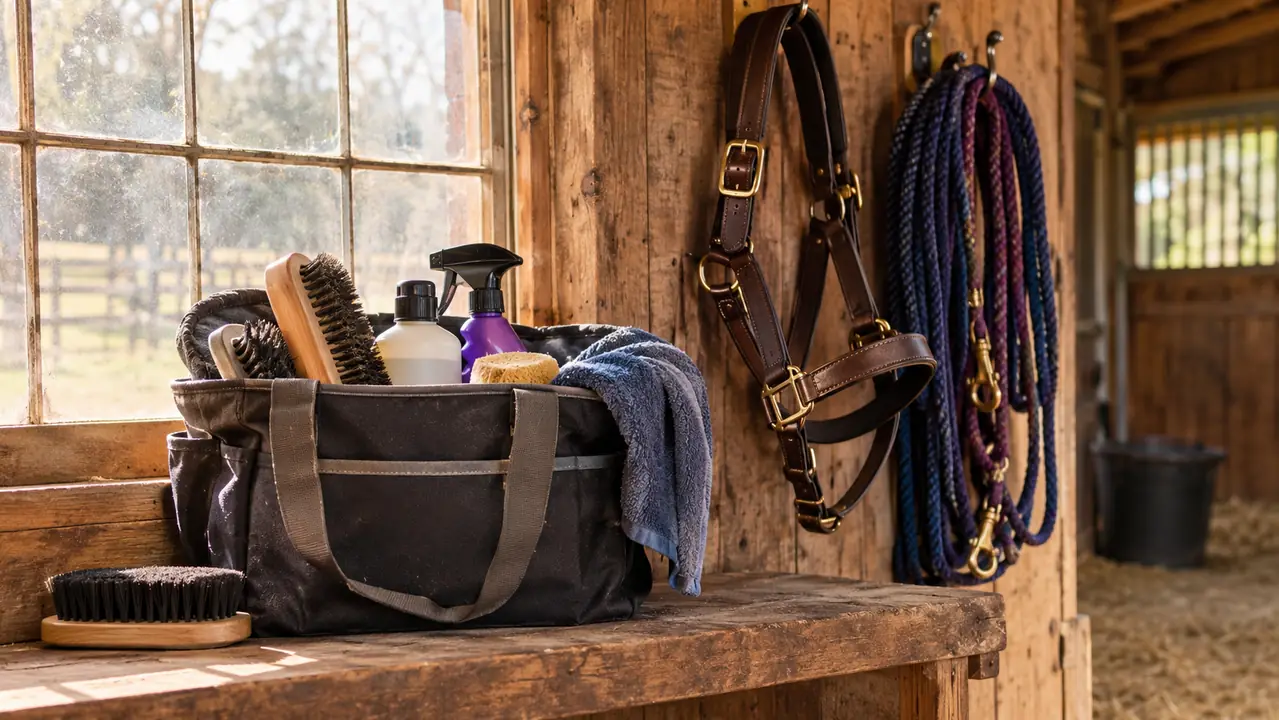
Every spring somebody asks me the same thing, usually while standing in the aisle of a farm store with a thirteen-piece brush set in one hand and a smaller kit in the other, working out the math on piece count. More pieces for less money looks like the obvious call. I have kept both kinds in my tack room, though, and after enough muddy springs I stopped counting pieces and started counting how many I actually reach for on a Tuesday morning when Dusty is standing in the cross ties and I have ten minutes before I need to be somewhere else.
Here is the short answer. If you groom one horse most days and you want one bag that stays organized and survives hanging on a stall wall, buy the Weaver Equine 7-piece grooming kit. If you need a brush in every hand, a spare set that lives in the trailer, and you do not mind replacing the whole thing every year or two, a cheap thirteen-piece set does that job and does it honestly. Both are real tools. They were just built for different owners, and knowing which owner you are is the whole decision.
| Weaver Equine 7-Piece Kit | Cheap 13-Piece Brush Set | |
|---|---|---|
| Pieces in the bag | Seven pieces, each with a daily job | Thirteen pieces, several of which you will never reach for |
| Storage | Nylon tote with six outer pockets and webbing handles, so every tool has a home | Thin zip case with one compartment; everything ends up in a pile |
| Hoof pick | Included, and it lives in an outside pocket you can reach with one hand | Usually included, usually buried at the bottom of the pouch |
| Sweat scraper | Included in the kit | Often left out of budget sets altogether |
| Weight packed | About 2.75 pounds with the bag | Under a pound, light enough to hang on a gate |
| Bristles | Hold up to daily use without shedding into the coat | Often shed plastic bristles within a season or two |
| Up-front cost | Costs more going in | Costs less going in |
| Stated backing | Satisfaction guaranteed per the maker | No stated warranty |
| Best for | One horse, groomed most days, one bag that stays together | Spare brushes for a trailer, a lesson string, or a muddy winter |
Where the Weaver Equine Kit Wins
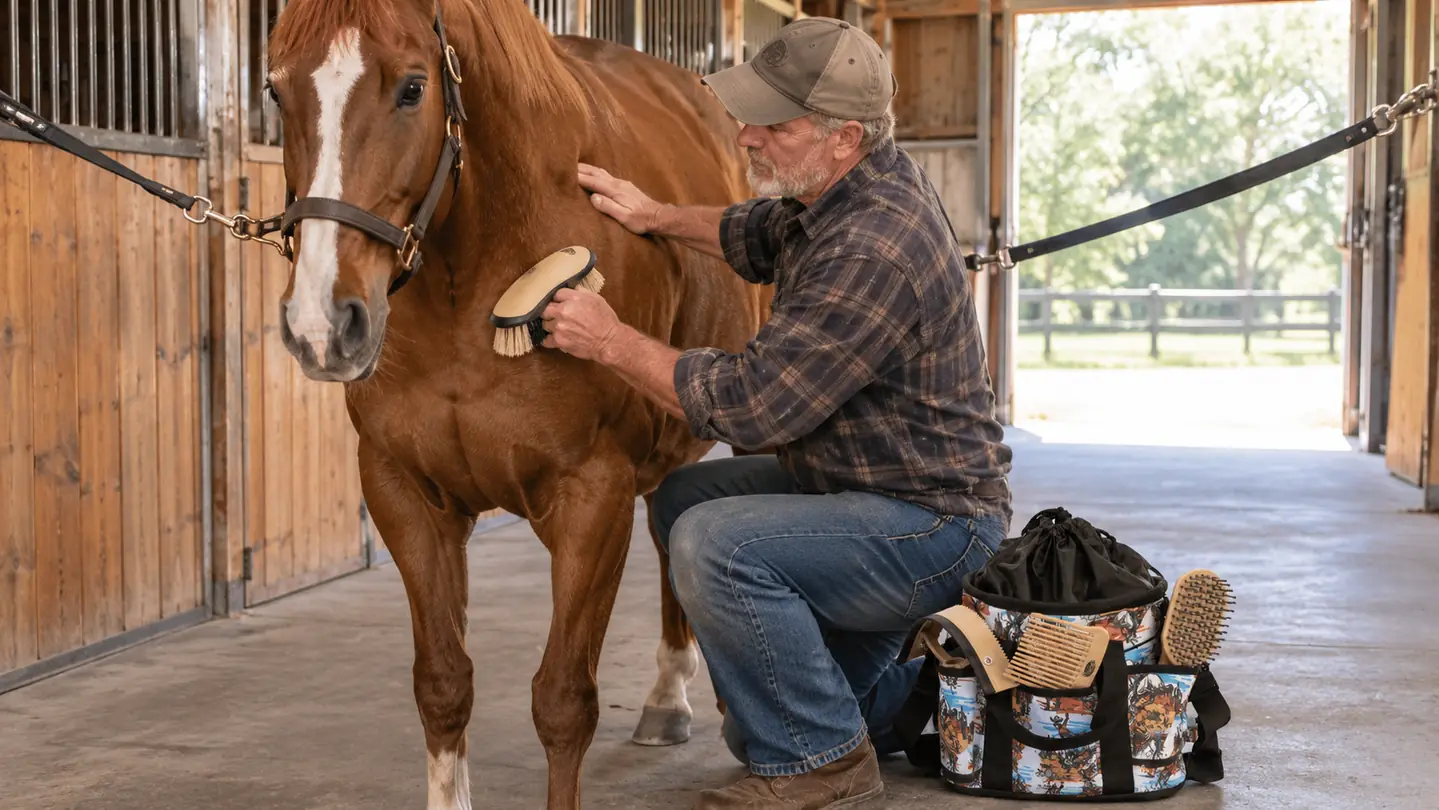
The six outside pockets are the part I did not expect to care about. My tack room has shelves I built myself, and I am fussy about where things live, so a grooming bag with one big open compartment turns into a rummage bin by the second week. This tote puts the hoof pick in a pocket you can reach with one hand, and the brushes stand up where you can see them instead of settling into a pile at the bottom. I carry it from the tack room to the cross ties, set it down on the aisle floor, and I never dig for anything.
It also holds its shape. That sounds like a small thing until you have watched a soft zip case fold over on itself and spill a hoof pick into the straw. The bag has comfortable webbing handles and a rectangular body that sits flat and stable, whether it is on the barn floor, on a bale of hay, or on the tailgate of the truck. Mine has been set down on gravel and on concrete and it has not split a seam. The whole thing weighs about 2.75 pounds loaded, which is light enough to carry in one hand along with a halter.
The sweat scraper is the piece I would not want to give up. A scraper is what turns a wet horse into a dry horse before you put a blanket on, and it is the first tool budget sets leave out. Having it in the same bag as the brushes means I am not walking back to the tack room with a wet horse and a dripping scraper in my hand. The kit also carries a satisfaction guarantee from Weaver Equine, which is more backing than most brush sets come with.
The bristles have held up, and that is the quiet difference between a kit built for daily barn work and a set built to hit a piece count. After a full season of use on a horse who gets groomed almost every day, the brushes still hold their shape and I am not picking plastic bristles out of a saddle pad. The comb has not lost teeth either, which I cannot say for the last cheap set I bought.
Where the Cheap 13-Piece Set Wins
The money argument is real and I will not pretend it away. A thirteen-piece set costs less going in, and if you are outfitting a barn full of kids, a lesson string, or a 4-H group where things walk off, that matters more than bristle quality. I have watched a good brush disappear into a teenager's duffel and never come back. Cheap brushes hurt less when they vanish, and there is a certain peace of mind in that.
Weight is the second honest point. A set like that weighs almost nothing, so it hangs on a gate or tucks into the small compartment of the trailer and you forget it is there until you need it. The Weaver Equine tote is about 2.75 pounds packed. That is not heavy by any stretch, but it is a bag you carry in one hand, not a pouch you stuff in a jacket pocket. On a cold morning when I am already hauling a hay bale and a bucket, I notice the difference.
And there is something to be said for a set you are willing to abuse. Mud season here is exactly what it sounds like. I want a stiff brush I can knock against a fence post to break the dried mud off it, and I do not want to be thinking about whether I am ruining a good tool in the process. A cheap set earns its place as the beater kit, the one that lives in the trailer and gets used on a filthy horse in a gravel parking lot before I load up and drive home.
Seven Pieces, Six Pockets, Nothing Lost at the Bottom
If you groom one horse most days, this is the bag that keeps the hoof pick where you can find it and the brushes standing up where you can see them. That is the whole pitch.
Amazon Check Today's Price on Amazon →Six outside pockets means the hoof pick has a home, the comb has a home, and the brushes stand up where I can see them instead of settling into a pile.
The Piece Count Trap
Thirteen sounds like nearly twice the value of seven, and on the packaging it is. In the aisle it is not. Most budget sets get to that number by padding, and the padding is where the frustration lives. Two brushes that do the same job. A body brush too small to move dirt on a 15.1-hand gelding. A plastic curry with edges sharp enough that Dusty takes a step back when he sees it coming. You paid for thirteen and you use five.
A seven-piece kit only works if every piece earns its keep, and that is the bet Weaver Equine made. The hoof pick, the comb, the sweat scraper, the brushes. If you are getting a horse ready for a weekend trail ride, you will touch all seven of those pieces. You will not touch all thirteen in the cheap set, not on your best day, and not on the day you are late for a fun show either.
I am not saying piece count is worthless. If two people groom the same horse at once, or you board and want a set that stays at the barn plus one for home, thirteen cheap pieces gets you two grooming stations for less than one good bag. That is a legitimate reason to buy it, and it is half the reason I keep a cheap set in the trailer myself.
What Six Weeks of Daily Use Looked Like
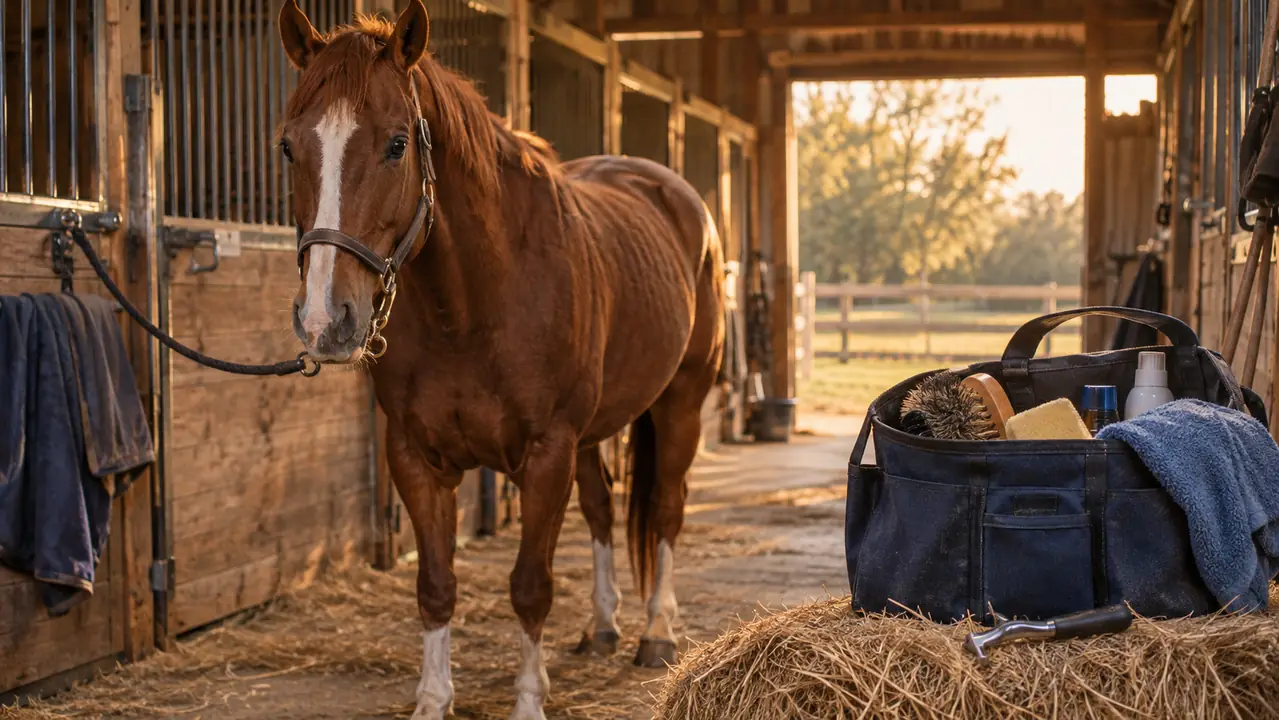
The first thing that changed was my routine, not the tools. When everything lives in one bag with a pocket for each tool, you stop making trips. I pick Dusty's feet, drop the pick back in its pocket, work the mud off his shoulders and hindquarters, then go over him again to lay the coat flat. Comb through the mane and tail, scraper if he is damp from the wash rack. Six weeks in, that loop had gotten shorter, because I was not hunting for anything between steps.
The second thing was comfort. Plastic handles are plastic handles and nobody is going to write a poem about them, but these are comfortable enough that my hand is not cramped by the time I finish the hindquarters. I have used cheap brushes where the handle is a thin flat stick and your fingers ache halfway through. That is the kind of thing you only notice once you stop noticing it.
The third thing was that nothing went missing. That sounds small. It is not small. In a bag with one compartment, the hoof pick is under three brushes by day four and by day ten you have bought a second one. Six weeks in, all seven pieces were still in the bag, which is a better durability test than anything I could have run on purpose.
What a Western New York Winter Does to Both
Our winters are hard on gear. Mud freezes. Bucket water freezes. Brushes come in off a wet horse and get thrown in the corner of a cold tack room, and whatever is inside them stays inside them until spring. This is where the difference between the two sets stops being theoretical and starts costing you real money in replacements.
The cheap set's zip case is the weak point. A nylon zipper that gets wet and then freezes is a wrestling match, and once the teeth start skipping you are carrying loose brushes in your arms across the aisle. I have also had budget bristles go brittle and start snapping off into the coat after a cold snap. Picking plastic out of a winter coat with your bare hands is nobody's idea of a good afternoon.
The Weaver Equine tote has no zipper to fight. It is an open rectangular bag with pockets, which means it drains, it dries, and it does not care about ice. The bristles have stayed flexible through the cold months for me, and the plastic handles have not cracked the way some cheap handles do when they sit in an unheated tack room all January. I set the empty bag on the shelf at night and it is dry by morning, which is more than I can say for the pouch that used to hold my old set.
Who Should Buy Which
Buy the Weaver Equine kit if you own one horse, groom most days, and you are tired of hunting for the hoof pick. It also makes sense as a first real kit for somebody moving up from borrowed brushes, because it teaches you to keep tools in one place instead of scattered across three buckets. If you want a single bag that goes from tack room to cross ties to trailer without repacking, this is the one I would buy again.
Buy the cheap thirteen-piece set if the brushes are going to live somewhere rough, if you need spares for a trailer or a second grooming spot, or if several people handle the same horse and you would rather not lose a good brush to somebody's duffel bag. There is no shame in a beater kit. I keep one, and I would replace it before I would replace the good bag.
The setup I actually run is both, and I would recommend that to anyone with a trailer. The good kit stays in the tack room where it belongs, hanging on its own hook within reach of the cross ties. The cheap set rides in the trailer for gravel parking lots, muddy hocks, and the last-minute cleanup before I load up. That is not a cop-out answer. It is just what each set is genuinely good at, and after enough seasons you learn to stop asking one tool to do two jobs.
The Kit That Stays in the Tack Room and Earns Its Hook
Seven pieces, six outside pockets, and a hoof pick you can find without digging. If you groom one horse most days, start here and keep the cheap set for the trailer.
Amazon Check Today's Price on Amazon →