
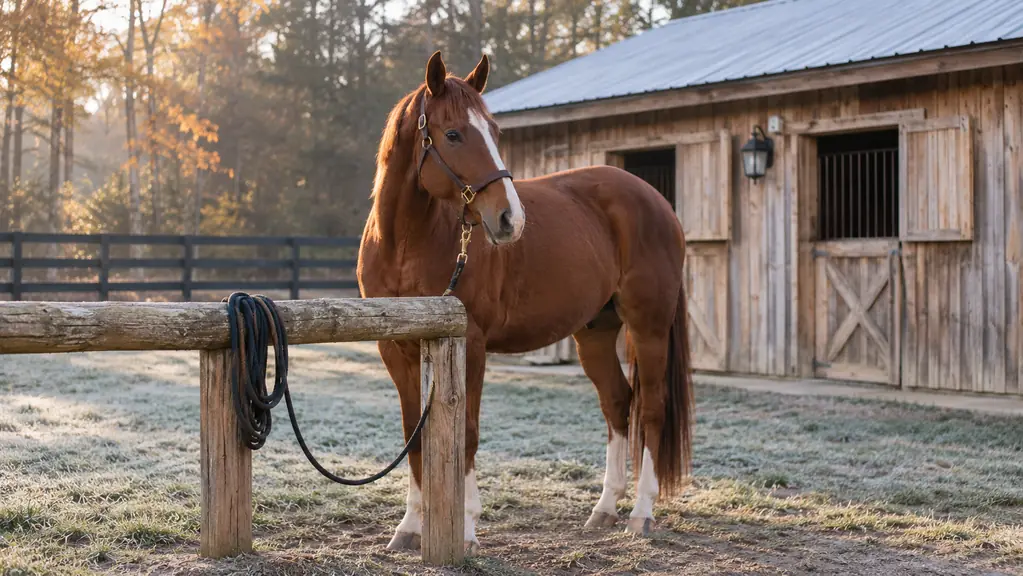
For years my halter of choice was whatever happened to be hanging on the gate post, which usually meant a stiff nylon one with a frayed crown and hardware that had seen better days. I did not think about it much. Then one wet spring morning Dusty, my 14-year-old sorrel Quarter Horse gelding, spun on the end of a lead rope in the pasture and that old halter pressed hard into the side of his face. Nothing dramatic happened. He was fine, I was fine. But I stood there afterward looking at the line it left on his cheek and realized I had been handing my horse the cheapest piece of gear in my whole setup.
That is when I started paying attention, and it is how I ended up with the Weaver Equine Nylon Horse Halter in the one inch average horse size, padded and adjustable. It has been on the gate post ever since, through two winters and a lot of muddy mornings. Here are ten reasons it earned that spot, roughly in the order they mattered to me.
The halter I reach for before anything else in the tack room
One inch nylon webbing, a soft PVC-coated foam rubber liner on the inside, brass plated hardware and a snap closure. Sized average horse and adjustable enough to actually fit one.
Amazon Check Today's Price on Amazon →A quick word on how I use it, so you know what these reasons are based on. Dusty wears this halter for turnout, for standing tied at the barn, for loading into the two-horse bumper pull, and for weekend trail rides on the back roads and state forest trails. It is not a show halter and I do not treat it like one. It gets rained on and wiped off and hung back on the same hook.
The padding is on the inside, where it actually counts
This is the whole reason I switched. The inside of the halter carries a soft PVC-coated foam rubber liner, so what sits against the horse is foam and coating rather than bare nylon webbing. The webbing is on the outside, taking the wear and the weather. On a horse that wears a halter for hours at a time, that difference shows up fast. It is the difference between a halter you leave on and one you keep pulling off because it is rubbing a raw spot behind the ears.
One inch of webbing is the right amount of webbing
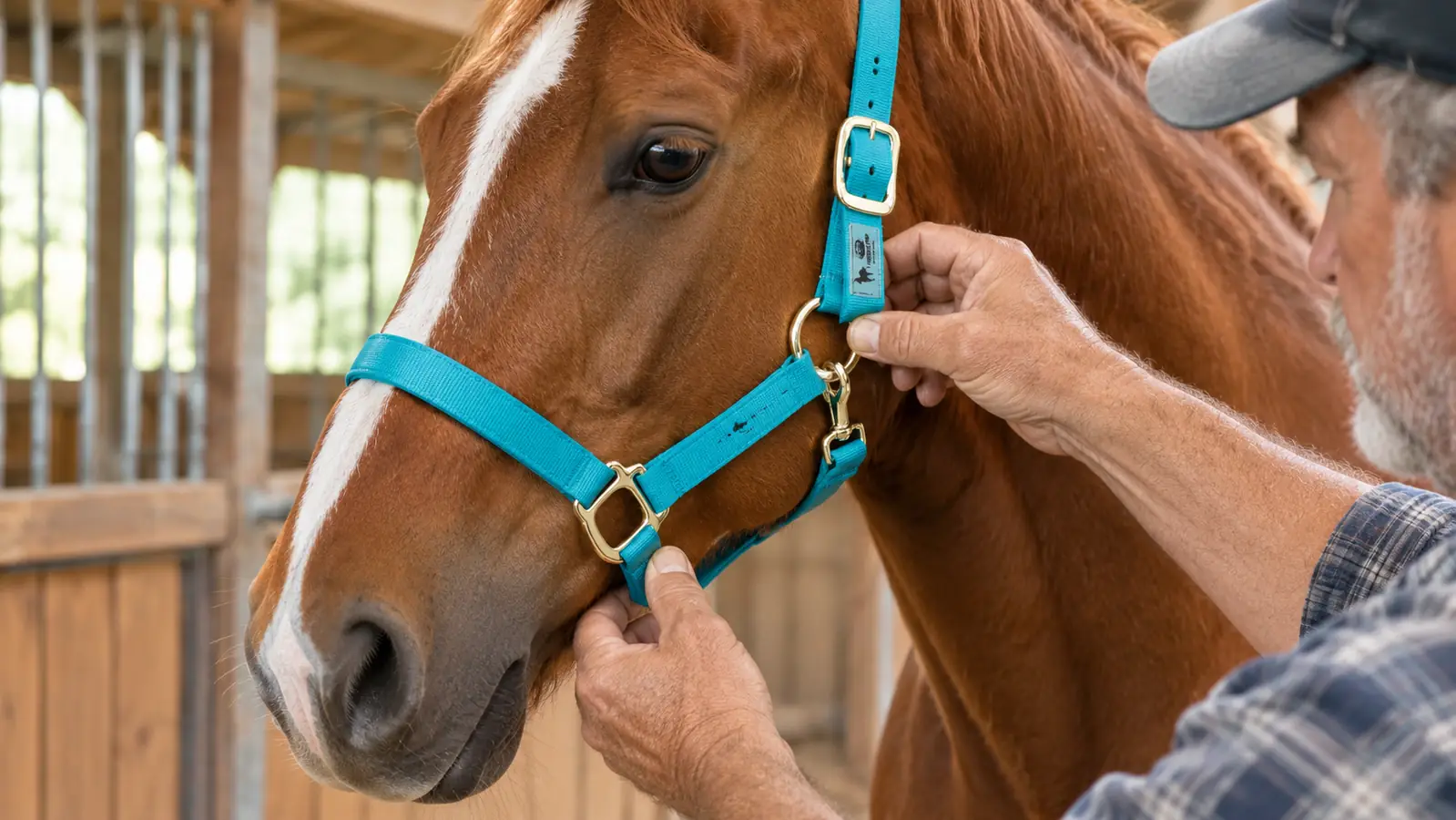
Weaver Equine builds this one in a 1 inch width, which is a sensible middle ground. Thin enough that it does not feel like a strap off a draft harness, wide enough that it does not roll or dig when there is real weight on it. When Dusty leans on a lead rope because he would rather stay out in the pasture, that inch of nylon spreads the pull out instead of concentrating it in one narrow line across his face.
Brass plated hardware that still works in February
The hardware on this halter is brass plated and it holds up. I have come to care about that more than I expected to. Cheap snaps get stiff in cold weather and start to stick right around the time your fingers are already numb and you are fumbling in the dark. This one has gone through two western New York winters on an unheated gate post and the snap still moves the way it is supposed to.
The snap closure gets it on and off in a hurry
When a horse will not stand still, every second counts. The snap closure means I am not threading a crown piece over Dusty's ears while he backs up and makes a liar out of me. Snap it, clip the lead rope on, done. It is a small thing you notice most on the days when nothing is going right and you are already late for the farrier.
It adjusts far enough to fit a plain, average head
This is the average horse size, and the adjustment points give you real range inside that. Weaver Equine recommends it for average sized breeds, the Quarter Horse, Thoroughbred and Warmblood sorts of heads, which is exactly what I have in the barn. I did not have to fight it onto Dusty the first time. I set it, checked that I could still get two fingers under it in a couple of spots, and it has stayed where I set it.
A halter is the piece of gear your horse wears every single day, and it is usually the last thing anybody shops for.
Mud and sweat hose right off the coating
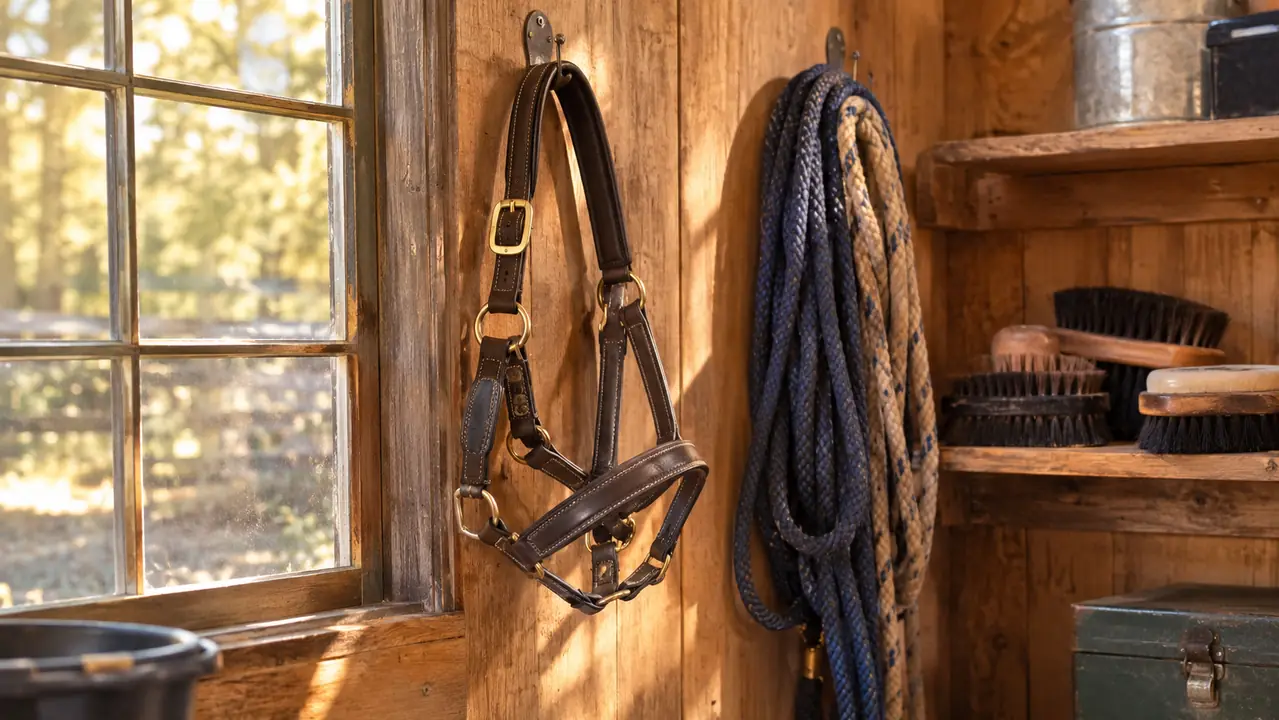
The PVC coating over the foam liner is the quiet practical win here. Bare nylon and bare foam soak up sweat, hold grit and start to smell like the back of the barn by August. This one rinses off with a hose, dries on the gate post and goes back on the horse. I have not had to scrub it once, and I am not a person who scrubs things.
It handles trailer duty without any drama
Some halters are for show and some are for work. This one is comfortably in the second category. It goes on before Dusty loads into the trailer, it stays on at the trailhead, and it comes home dirty and none the worse for it. The brass plated hardware has not bent or seized, which is more than I can say for the last couple of halters I owned before this one.
Light enough that he forgets he is wearing it
The listed weight is 1.26 pounds, which is not a number I ever thought I would care about. But a halter with heavy hardware pulls on a horse's head all day long, and you can see it in how they carry themselves. This one does not do that. Dusty wears it for turnout and for standing tied, and we have never had a rub mark or a sore spot come out of it.
Simple enough that there is nothing to fail
No extra strap, no dangling tail, no hardware bolted on where it does not need to be. It is nylon webbing, a padded liner, brass plated hardware and a snap, in a solid pattern. Nothing to snag on a fence post, nothing to catch on a branch out on the trail, nothing to figure out with gloves on. The best horse gear I own is the gear with the fewest moving parts, and this fits that rule.
It makes the rest of your gear fit better
This is the reason that snuck up on me. When the halter fits right, everything you clip to it works better. The lead rope hangs clean instead of riding sideways. The trailer tie sits level. Blanket straps are not fighting a halter that has slid down the neck. One correctly fitted piece of nylon quietly fixes three other things you were probably blaming on something else.
What I'd Skip
If you are showing at a breed show where turnout gets judged, this is not the halter for that class. It is a solid, plain, working halter and it looks like one. Buy the show halter for the show and keep this one for the other three hundred and sixty days of the year, which is where most of us actually live.
I would also skip it if your horse has an unusually large or unusually fine head. The average horse sizing did exactly what it should for my Quarter Horse, but a draft cross or a light-boned Arab might want a different size entirely, and forcing the wrong size is how you get rubs. Measure before you buy instead of guessing off a picture.
And one honest caution. If you want something you can leave on a horse for weeks at a time, unsupervised, out in a pasture with other horses, no nylon halter is the right answer, this one included. That is a safety question, not a gear question, and I would rather say so than sell you something that is not built for it.
Same halter, still on the gate post, still doing its job
One inch nylon webbing, a soft PVC-coated foam rubber liner, brass plated hardware, snap closure, average horse sizing and adjustable. The one I would buy again without standing in the aisle thinking about it.
Amazon Check Today's Price on Amazon →