
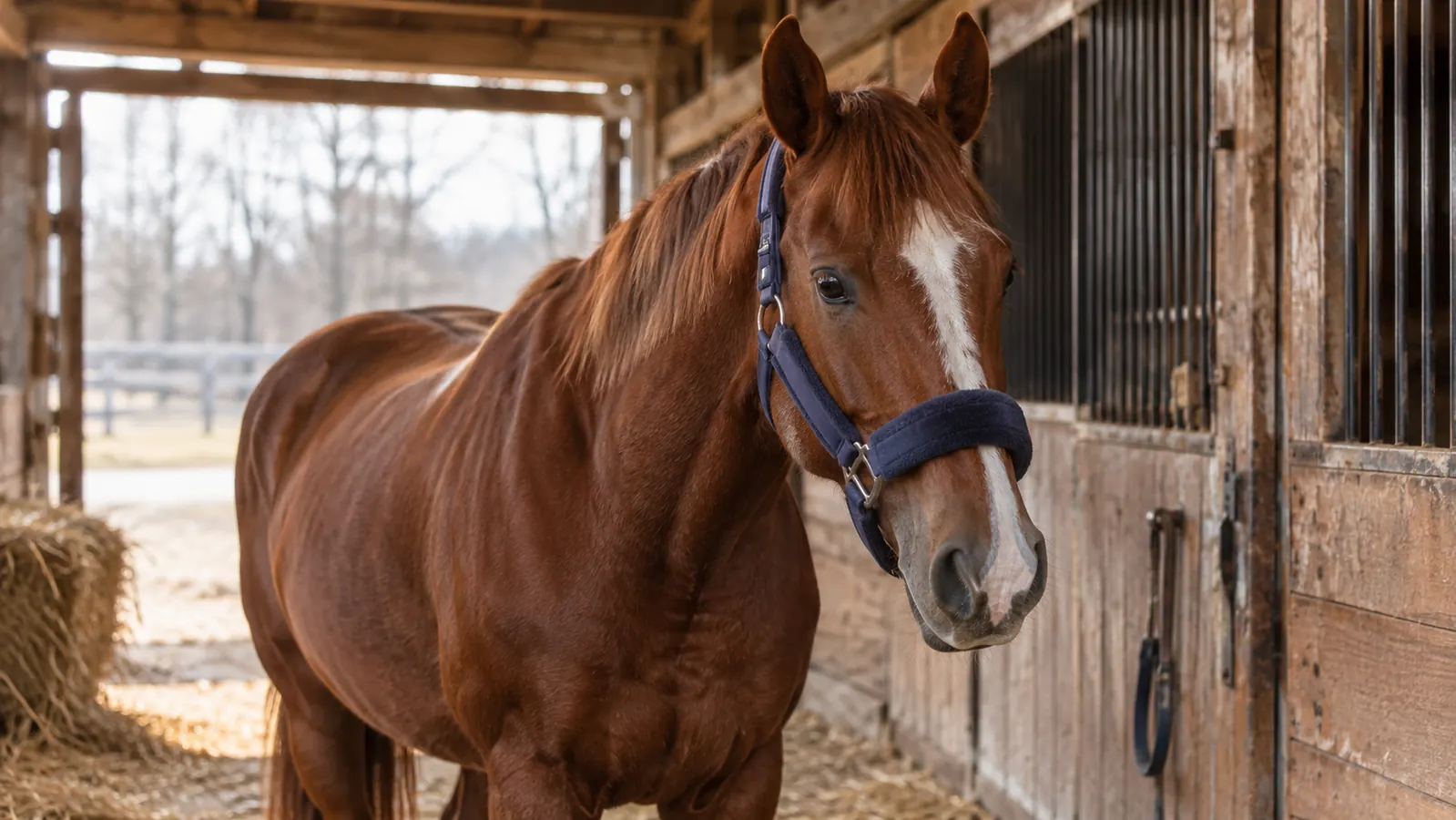
Two winters ago I bought a halter off the clearance rack at the feed store because my old one had a frayed cheek strap and I needed something that morning. By March the replacement had a fray of its own, right where the buckle rubs, and I was back where I started. So when the Weaver Equine Nylon Horse Halter came home with me last April, I decided I was going to pay attention to it instead of just hanging it on a nail and forgetting it. It has been on the hook by my tack room door ever since, and on my gelding's head most mornings since then.
I keep one horse, a 14-year-old Quarter Horse gelding, and I ride back roads and state forest trails most weekends. That means tack gets judged on a different scale than it does on a showgrounds. Does it go on straight in the dark at five in the morning? Does it still work in February when the nylon is stiff and your fingers are numb? Does the hardware leave a rub mark after a two-hour haul? Those are the questions I actually care about, and they are the ones this review answers.
The Quick Verdict
A plain, honest padded nylon halter that has survived two winters of daily barn use without a fray or a bent piece of hardware. The padding is the reason to pick it over plain webbing. The average horse size runs generous, so measure before you order.
Amazon Check Today's Price →The halter I reach for before the coffee is done
One inch nylon, a soft PVC-coated foam liner, and brass plated hardware that still snaps with gloves on.
Amazon Check Today's Price on Amazon →How I've Used It
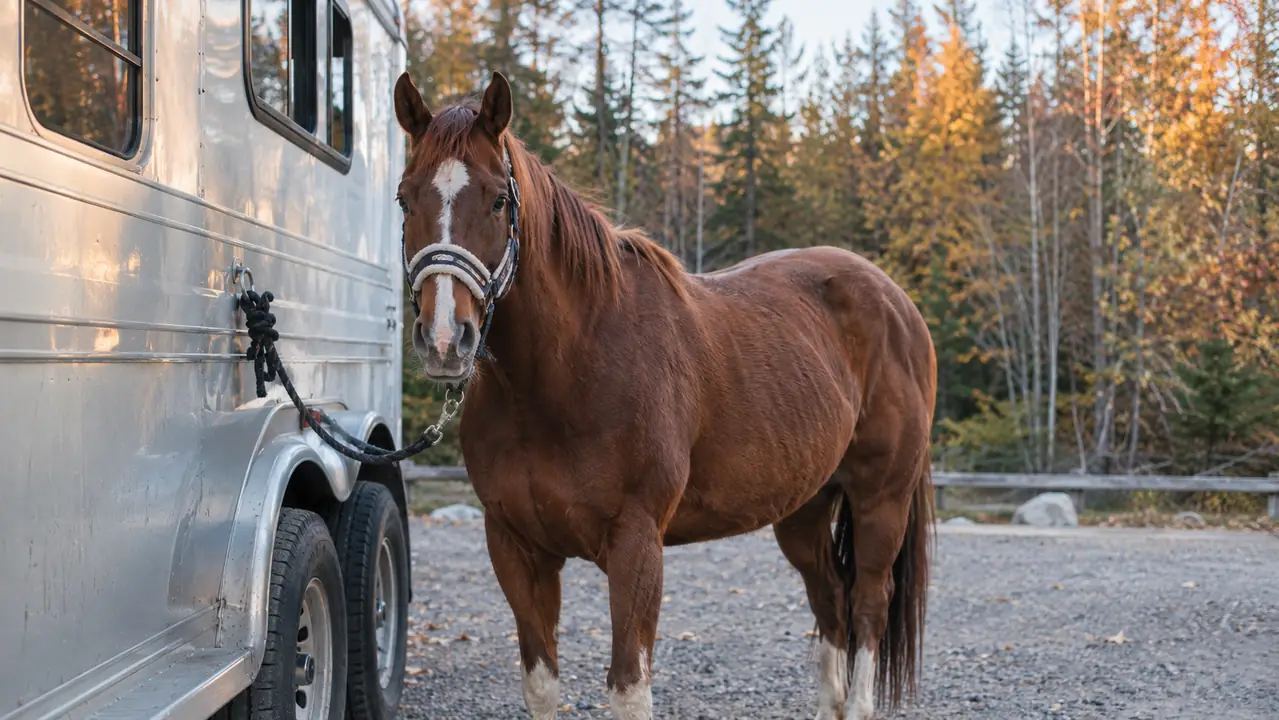
The honest answer is that I use it the way anybody uses a halter. I catch with it, lead with it, tie with it, and trailer with it. Nothing exotic. A typical Saturday goes like this: halter on at the barn, gelding led out to the trailer, tied to the outside of the trailer while I load hay bags and check the hitch, off at the trailhead, back on for the ride home. Add farrier days, the vet's spring visit, and one long afternoon standing tied at a fun show, and that is the whole test.
What that schedule does to a halter is wear it in three specific places. The crown piece gets stretched every time you pull it over the ears. The cheek area takes the pull when a horse leans back against the tie. The noseband takes the brunt when he rubs his face on the side of a trailer or a fence post. If a halter is going to fail, it fails at one of those three spots, and two winters is plenty of time to find out.
This one is still in one piece. The padded sections have a shine on them now from his nose, and the webbing has softened the way good nylon does, but I have not found a fray, a pulled stitch, or a bent piece of hardware. That is not a thrilling result to read about. It is just the result I wanted when I bought it.
There was one afternoon in August that I think about when I judge this halter. Ninety degrees, horse tied to the trailer at a fun show ground for close to three hours while I watched classes, and he leaned on that tie most of the time out of pure boredom. When I finally took it off, there was a faint hair mark on his nose where it had been sitting, nothing more. The clearance halter would have left a rub by the second hour.
The Padding Is the Reason to Pick This One
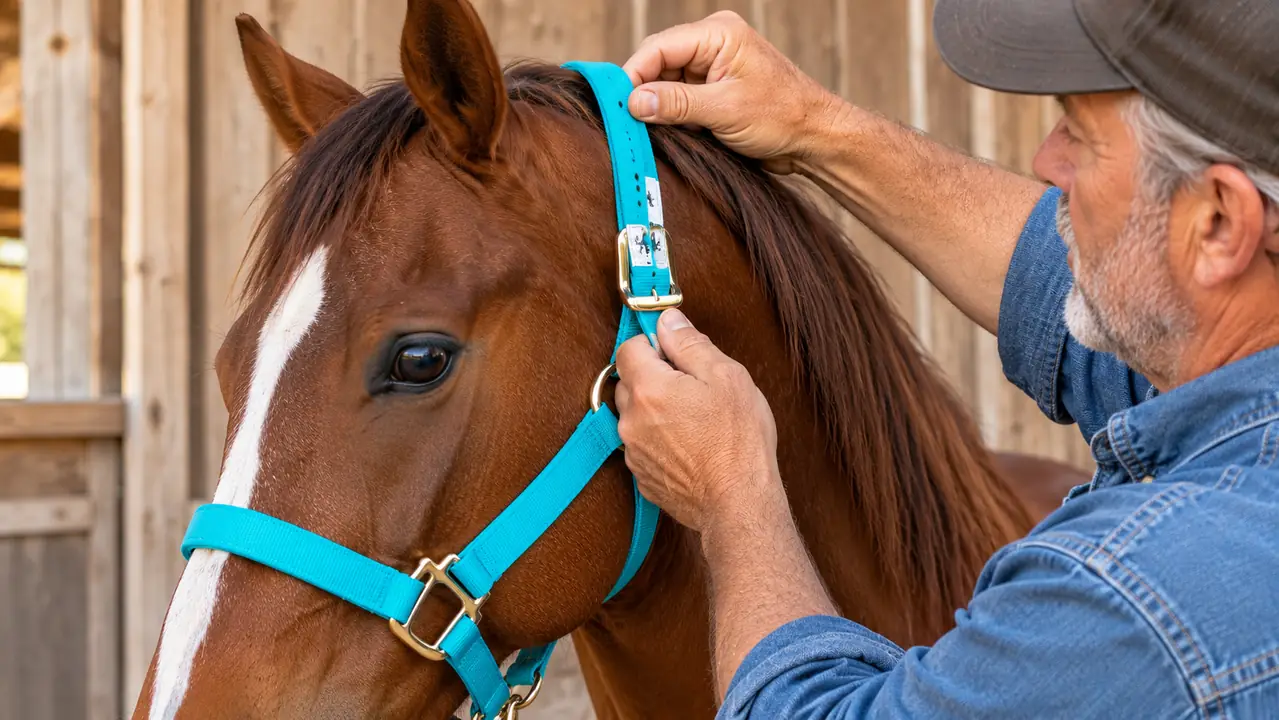
The Weaver Equine halter carries a soft PVC-coated foam rubber liner, and on a horse with a thin coat or sensitive skin that liner is the difference between a halter he tolerates and one he leans into. My gelding is not delicate, but he is opinionated about his head. Anything that rattles, pinches or slides gets a head toss and a step backward, and I brace for it every time I bring home new tack.
The first week with this one, the dance did not happen. The liner is soft enough that it settles against the face rather than riding on it, and the nylon underneath keeps the padded sections from folding or curling when they get wet. That combination is what I was paying for. Plenty of halters are soft. Fewer stay soft and also hold their shape after a soaking.
What I did not expect was how much easier the halter is to put on because of that liner. The padded sections hold a shape instead of collapsing, so I can find the crown piece by feel in the dark with cold hands. That is a small thing. Small things are most of what daily horse keeping actually is.
Worth saying plainly, though: padding is not a substitute for fit. A padded halter that is too big will slide and rub worse than a plain one that fits, because the liner adds bulk between the webbing and the skin. I laid out the longer case for padding in my list of reasons a padded nylon halter is worth owning, but the short version is that the padding only starts helping once the size is right.
Brass Plated Hardware Through a Western New York Winter
We get lake-effect snow here and my barn is not heated. The tack room holds whatever temperature the outside air is doing, plus a little warmth from the horses. Metal in that room goes one of two ways. It either holds up or it pits and goes stiff and sharp by February.
The hardware on this Weaver Equine halter is brass plated, and after two winters of daily handling it is still smooth. The snap closure still closes with one thumb, which sounds like a small thing until you are leading a horse in the dark in a barn coat with gloves on. A snap that works is the difference between a calm minute and a wreck.
I have owned halters where the hardware went chalky and started catching on the webbing inside a season. This one has discolored slightly the way brass does, which I do not count as a problem. I would rather have a little patina than a sharp edge anywhere near a horse's eye.
Two winters of daily use, one long haul to a fun show, and I have not found a fray, a pulled stitch, or a bent piece of hardware.
Sizing Notes for an Average Horse
This is sold as the one inch average horse size. My gelding is about 15.1 hands and built like a Quarter Horse, so he is squarely in that category. The halter fits him, but it fits with the adjustment pulled in most of the way, which tells me the sizing leans generous rather than snug.
If you have a fine-boned horse, a younger one still filling out, or anything with a smaller head, order with that in mind. One inch webbing is a good middle weight for a full-grown horse. Wide enough to spread pressure when he leans on a tie, narrow enough that it does not feel like a strap off a piece of luggage.
The fit check is the part most people skip. Put it on and look at it from the side. The noseband should sit roughly a hand's width below the cheekbone, and you should be able to slide two fingers under the crown. If a whole fist fits, it is too big, and it will rub no matter how soft the liner is.
A halter should not sit so low that the noseband crowds the nostrils, and it should not sit so high that it presses against the cheekbone. Somewhere in the middle, sitting level around the head, is right. That sounds like a lot of fuss for something that just goes over the ears, but it is the whole reason a well-fitted halter disappears and an ill-fitted one leaves a mark.
Two Hours on the Road
The gelding hauls fine but he does not love it, and he rubs his face on the trailer wall when we stop. That is the hardest thing I ask a halter to do. Two hours each way to a fun show ground last fall, with a stop in the middle where he worked the noseband along the divider, and it came home without a scuff deep enough to matter. The padding took the wear instead of his face taking it.
I do not use a trailer tie longer than I need, and I check the halter before we pull out. Fit that has slipped is the usual reason a horse rubs on a haul, more often than the halter itself. Mine has stayed where I set it, and I think that is because the webbing is stiff enough to hold the adjustment instead of creeping.
Nylon Halter or Rope Halter
I keep a rope halter in the trailer as well, and people ask which one I actually use. The answer depends on the horse and the day. A rope halter gives you more feel through the lead, and some horses pay better attention with one on. It also concentrates pressure into a thin line, and on a horse that pulls, that thin line is not doing him any favors.
The padded nylon halter is what I reach for on trailer days, on farrier days, and any time the horse will be standing tied for a while. It is the kinder of the two when he is going to wait. If you want the full argument, I compared the two styles directly in the nylon halter versus rope halter piece on this site.
Where It Falls Short
Sizing is the first one. Average horse covers a lot of ground, and this halter sits on the roomy end of that range. That is a genuine drawback if you are buying sight unseen for a horse you cannot measure first.
Second, there is no breakaway piece. Nylon does not give, and if you tie hard and fast, which you should not do anyway, there is nothing on this halter that will let go under load. That is a fact about nylon halters generally rather than a flaw specific to this one, but it belongs in an honest review.
Third, the padding holds dirt. It wipes clean with a damp rag, but it does hold it, and if you want tack that looks show-ring fresh through a muddy spring, this will not stay that way. Mine has a permanent slight dullness to the liner after two years. I do not mind. Some people will.
Last thing: if you leave a halter on at turnout, this one has nothing that will break if a horse gets hung up. Take it off before you turn out. That is a rule for every nylon halter, not just this one, and it is worth repeating.
Keeping It Clean
I wipe the liner down with a wet rag about once a month in summer and less often in winter, and I hang the halter to dry instead of leaving it in a heap on the tack room floor. That is the entire care routine. Nylon does not need conditioner and brass plated hardware does not need polish to keep working. It just needs to not sit in a puddle.
Twice I have dropped it in a bucket of warm water with a little saddle soap after a particularly muddy ride. Both times it dried back into shape and the padding did not separate from the webbing. That last part is what I watch for, because once a liner starts to lift at the edge, the halter is finished no matter how good the rest of it looks.
What I Liked
- PVC-coated foam liner keeps an opinionated horse comfortable
- Brass plated hardware still works smoothly after two winters
- One inch nylon webbing holds its shape when wet
- Snap closure is easy to work one-handed with gloves on
- No fraying or pulled stitching after daily use
Where It Falls Short
- Average horse size runs generous
- Padded liner holds dirt and needs wiping
- No breakaway piece, same as any nylon halter
- Not a show-ring piece and will not stay looking new
Who This Is For
This is for the person with one or two horses who needs a halter that works every day and does not need to be replaced every season. It suits a full-grown average horse, and it suits someone who trailers and ties and handles more than someone showing in a halter class where the stitching matters more than the fit. It is a good step up for anyone who has been using plain webbing on a horse that rubs, because the liner is the whole reason to spend a little more.
Who Should Skip It
Skip it if your horse is small, fine-boned, or still growing and you cannot try before you buy. Skip it if you tie hard and want a breakaway as a matter of policy. And skip it if you are shopping for the show ring, because this is a working halter and it looks like one. Nobody at the barn will comment on it. That is exactly what I wanted from it.
Two winters in and it is still the halter I grab first
The Weaver Equine halter in one inch average horse size, with the foam liner and brass plated hardware. Check the current price and the size chart before you order, because average runs generous.
Amazon Check Today's Price on Amazon →