
Short answer first, because that is probably what you came for: for trailering and for turnout, put the Weaver Equine Nylon Halter on the horse and leave the rope halter hanging in the tack room. Not because a rope halter is a bad piece of gear. Because the two are built to do different jobs, and the job you are asking about is the one the padded nylon halter was made for. If you only want one halter and your horse spends most of its life tied to a trailer or turned out in a small paddock, this is the one.
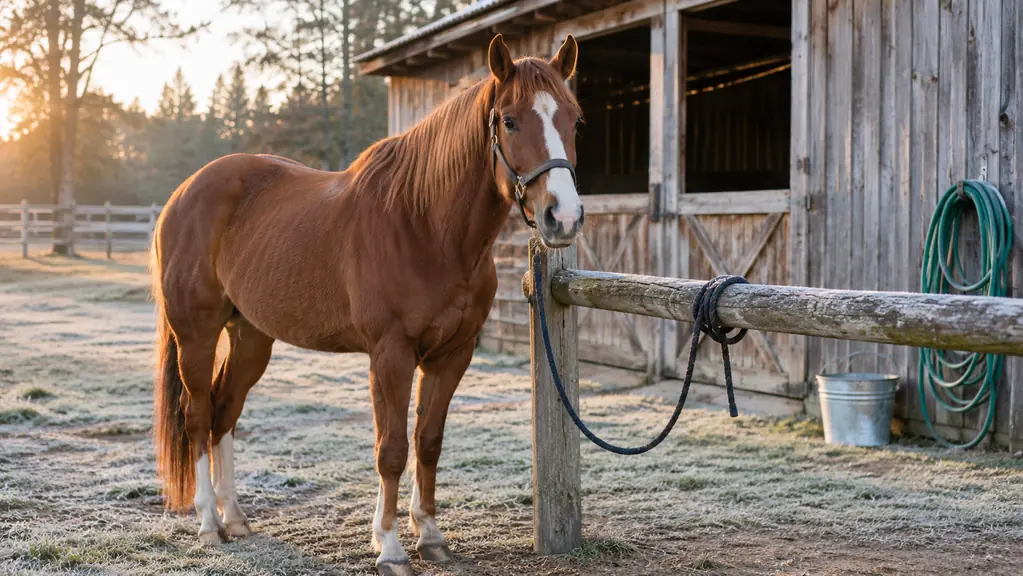
The longer answer is the one worth reading, so here it is. I am Shelby Hartwell. I keep one horse, a 14-year-old sorrel Quarter Horse gelding named Dusty, in a two-stall barn on a few acres outside a small farm town in western New York. We ride the back roads and the state forest trails on weekends, and I haul him in a two-horse bumper-pull trailer. The Weaver Equine halter, the 1 inch padded and adjustable one sized for an average horse, is the halter that hangs by my barn door. A rope halter lives in the tack room and comes out for groundwork and for the days Dusty needs a refresher on personal space.
Side by Side, in Plain Terms
| Weaver Equine Nylon Halter | Rope Halter | |
|---|---|---|
| Material | 1 inch nylon webbing with a soft PVC-coated foam rubber liner | Single-strand rope, knotted at the pressure points |
| How pressure sits | Flat webbing spreads the load across the cheek and poll | Thin rope concentrates it into a small spot |
| Fit adjustment | Adjustable, sized for an average horse | Reties to fit almost any head, with no fixed holes to run out of |
| Getting it on a horse that tosses its head | Snap closure at the throat, so it opens up and goes on in one motion | Has to go on over the ears as one piece |
| Standing tied in a trailer | Flat webbing and a liner sit still against the head when a horse braces | Knots can press when a horse sets back |
| Turnout | Wider surface area and a liner, so less chance of a rub on a horse that grazes all day | No give if it snags, and knots sit right where the nerves run |
| Leading a horse that crowds you | Works fine, but the padding softens the signal | Precise pressure and a quick release, which is the whole point |
| Mud, grit and sweat | The foam liner holds dirt and wants rinsing now and then | Hose it off, shake it out, it dries in minutes |
| Hardware | Brass plated hardware and a snap | No metal at all, so nothing to bend or corrode |
| Weight and bulk | Listed at 1.26 pounds, more material sitting on the head | Light and thin, folds into a jacket pocket |
| Best for | Trailering, turnout, and everyday barn work | Groundwork, clinics, and a horse that leans on you |
Read that table the way I would read it, which is by asking what the horse is doing while he wears the halter. Standing in a trailer for two hours is a different job from learning to back off a lead rope on the ground. Most of the arguments people get into about halters come from forgetting which job they were doing at the time.
Where the Weaver Equine Nylon Halter Wins
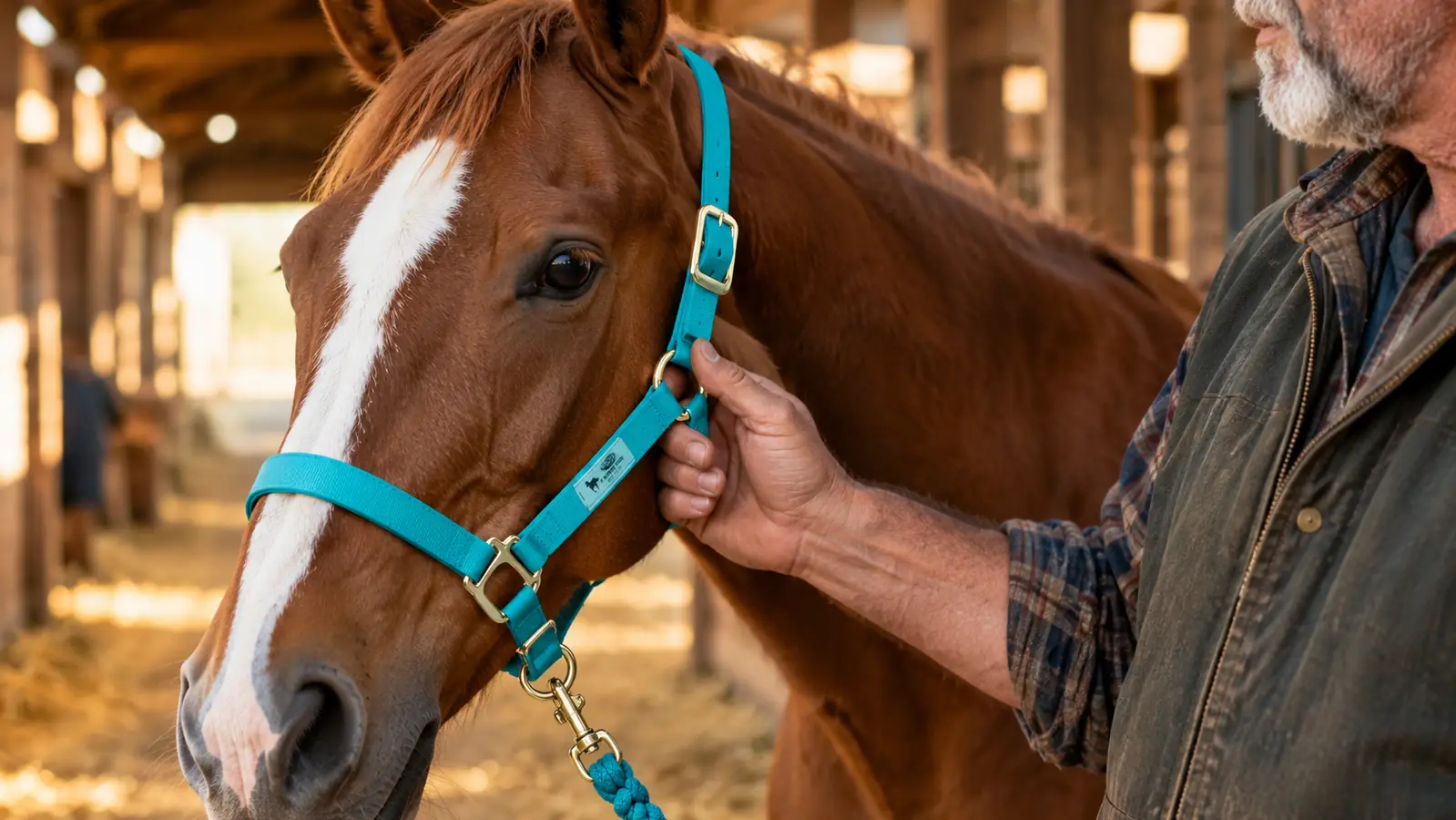
The padding is the first thing, and it is the reason I reach for this halter on a horse that has to stand tied. The 1 inch nylon webbing is wide enough to spread pressure across the cheek and the poll instead of cutting a line into it, and the soft PVC-coated foam rubber liner sits between the webbing and the hair. On a cold morning when Dusty is fresh and leaning on the lead rope, that liner is the difference between a horse that settles and a horse that starts throwing his head. Thin gear on a strong horse teaches bad habits fast, and a horse that learns to pull back is a problem you own for years.
The second thing is the snap closure at the throat. The halter opens up flat instead of having to be dragged over the ears, which matters more than people admit. I have put this halter on a horse that was already dancing at the trailer door, and I have put it on one that was half asleep. The brass plated hardware has held up through two winters of being grabbed, dropped in the mud and hung on a nail, and the snap still snaps the way it did the week I bought it.
The third thing is what the halter does when nothing is happening. It sits still. In a trailer, on a tie line at a trailhead, standing in cross ties while I pick feet, flat webbing with a padded liner just stays where you put it. There is no knot working its way loose under the jaw, no thin rope sawing at the poll because the horse dropped his head to graze. For the boring ninety percent of a horse's day, boring gear is what you want.
Where a Rope Halter Wins
A rope halter is more adjustable, and I mean that honestly. There are no holes to run out of and no fixed sizes to fall between. You retie the knot and it fits a narrow, long-headed horse and a wide, blocky one on the same afternoon. If you own two horses with completely different heads, or you are fitting a youngster that is going to change shape twice before spring, a rope halter will keep up with that in a way a sized nylon halter simply cannot.
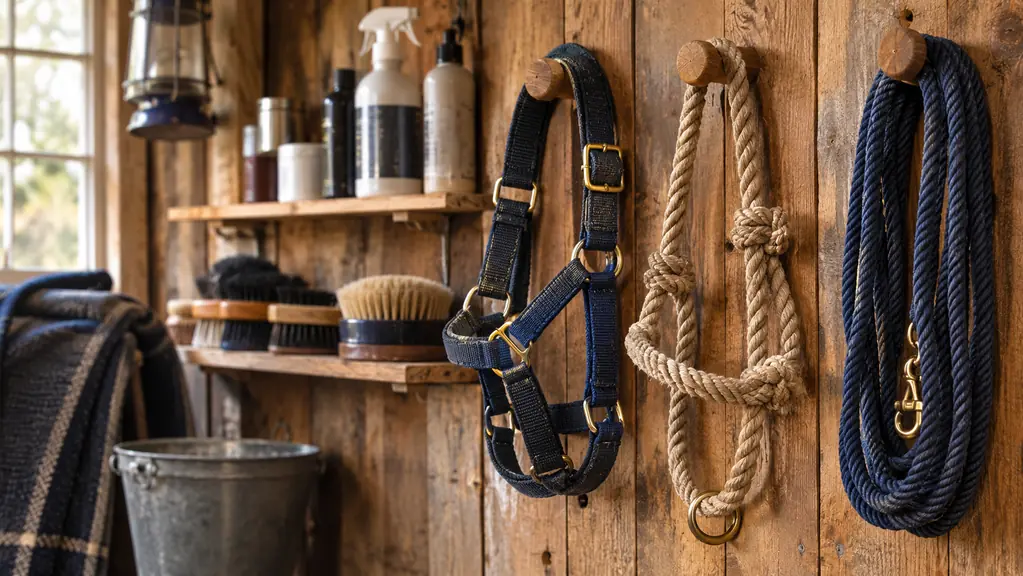
It also sends a clearer signal. When I am working a horse on the ground and I want him to move his hindquarters off a light feel, thin rope gets the message across in a couple of seconds where a padded halter muffles it. And rope is easier to live with in the mud. I have hosed a rope halter off, shaken it out and hung it up, and it was dry before I finished the water buckets. The liner on any padded halter, the Weaver Equine one included, wants a rinse and a proper drying session or it starts holding grit. Last, a rope halter folds into a pocket. Mine rides in the trailer's side compartment all summer, and I forget it is there until I need it.
The Halter That Lives by My Barn Door
The Weaver Equine 1 inch padded and adjustable nylon halter, average horse size, with a soft PVC-coated foam liner, brass plated hardware and a snap at the throat. This is the one I grab for hauling, turnout and every ordinary morning.
Amazon Check Today's Price on Amazon →How I Tested Both
I did not set this up as a formal test with a clipboard. I did it the way most people actually figure gear out, which is by using one thing until it either works or annoys me. The Weaver Equine halter has been in daily use on Dusty for two full winters and the summers in between. It has been on him for trail rides in the state forest, for the forty minute haul to the open show grounds where I mostly stand around and drink coffee, for turnout in the small paddock behind the barn, and for every farrier visit and vet call in between.
The rope halter has been in and out of the tack room over the same stretch. It goes on for groundwork sessions, for loading practice when Dusty decides the trailer is suspicious again, and for leading him past the one corner of the barn where he likes to test whether I am paying attention. It has never been the halter I leave on him overnight or turn him out in, and that is a deliberate choice on my part, not a knock on the design.
What I watched for was simple. Rub marks, especially behind the ears and across the nose. Whether the halter stayed where I set it after a horse dropped his head to graze. Whether the hardware still worked in February with gloves on. And whether I could get it on and off a fidgeting horse without a wrestling match. Those four things decide whether a halter stays on the hook by the door or gets buried in the bottom of a tack trunk.
The Trailer Question, and the Turnout Question
Trailering is where I am least willing to experiment. A horse in a moving trailer will brace, and he will brace against whatever is on his head. Flat nylon webbing with a padded liner spreads that load. A knot does not. I have watched a horse set back on a rope halter in a trailer and come out with a mark across the bridge of his nose that took a week to fade, and I have never had that happen with a padded halter. The snap closure matters here too, because if something does go wrong, I want to be able to open the halter fast rather than working a knot loose with a horse on the other end of it.
Turnout is the other half. A halter left on a horse in a paddock is a halter that will eventually find a fence post, a water bucket handle or a low branch. What I want in that situation is surface area and give, and the padded nylon halter has both. The liner also stops the kind of slow rub you get on a horse that grazes with his head down for six hours, where the halter creeps forward and the nose band sits against the same spot all afternoon.
The tradeoff is dirt. That foam liner will pick up grit and sweat, and in mud season it needs a rinse and a real drying, not just a wipe with a rag. I do it on a Sunday while the coffee is going. The rope halter in the same conditions takes ten seconds to hose off, which is the honest reason a lot of people keep one around even when they prefer the padded halter for everything else.
Two winters of daily use and the foam liner has held its shape, the snap opens with gloves on, and I have never once found a rub mark behind Dusty's ears from this halter.
The Honest Tradeoffs
I am not going to pretend this halter solves everything, because it does not, and the things it does not do are worth knowing before you spend anything on it.
What I Liked
- 1 inch nylon webbing with a soft PVC-coated foam rubber liner that sits flat against the head
- Snap closure at the throat, so it goes on and comes off a fidgeting horse quickly
- Brass plated hardware that has held up through two winters of daily use
- Adjustable, and sized as an average horse halter, which fits a 15.1 hand Quarter Horse well
- Stays put on a tied horse and in a trailer instead of creeping and rubbing
Where It Falls Short
- The foam liner holds grit and sweat and needs a rinse and a proper dry now and then
- Sized for an average horse, so a pony head or a draft head will need a different size
- It softens the signal compared to thin rope, so it is not my first pick for groundwork on a pushy horse
- More material on the head than a rope halter, which some horses fuss with at first
Sizing Matters More Than the Type
Before you argue about nylon versus rope, get the size right, because a halter that does not fit will rub no matter what it is made of. This one is the 1 inch average horse size, and the manufacturer lists it for average breeds like Quarter Horses, Thoroughbreds and Warmbloods. Dusty is 15.1 hands and it fits him with room to adjust at the crown, which is exactly what that size is meant to do. The nose band sits well above his nostrils and the cheek pieces line up where they should.
If you have a pony, a yearling or a draft cross with a big, wide head, buy the size that matches the head rather than trying to make an average horse halter stretch. I have seen people crank a halter down as tight as it will go and then wonder why the horse has a bald patch behind his ears three weeks later. Measure around the nose and behind the ears, compare it to the size chart, and if you are between sizes on a young horse, remember he is going to grow into the bigger one faster than you think.
Who Should Buy Which
Buy the Weaver Equine Nylon Halter if your horse hauls, gets turned out, stands tied at a trailer or a hitching rail, and you want one halter that handles all of that without leaving marks. Buy it if you have ever had to wrestle a halter over a horse's ears in the cold with gloves on, because the snap at the throat ends that particular fight. Buy it if you are the person who wants to hang one halter by the barn door and not think about it again until the farrier shows up.
Keep a rope halter if you do groundwork, if you have a horse that crowds you on the lead, or if you are working with a young horse whose head is still changing shape. It is also the right tool if you want something that rinses clean in seconds and disappears into a jacket pocket. Plenty of people, me included, own both. The mistake is asking the rope halter to be the trailer halter, or asking the padded halter to teach a horse to respect a lead rope. Neither one is built for the other's job.
One Halter for the Trailer, the Paddock and the Farrier
The Weaver Equine padded nylon halter in average horse size. Padded 1 inch nylon, brass plated hardware, a snap at the throat, and a fit that stays where you put it. It is the one hanging by my barn door.
Amazon Check Today's Price on Amazon →