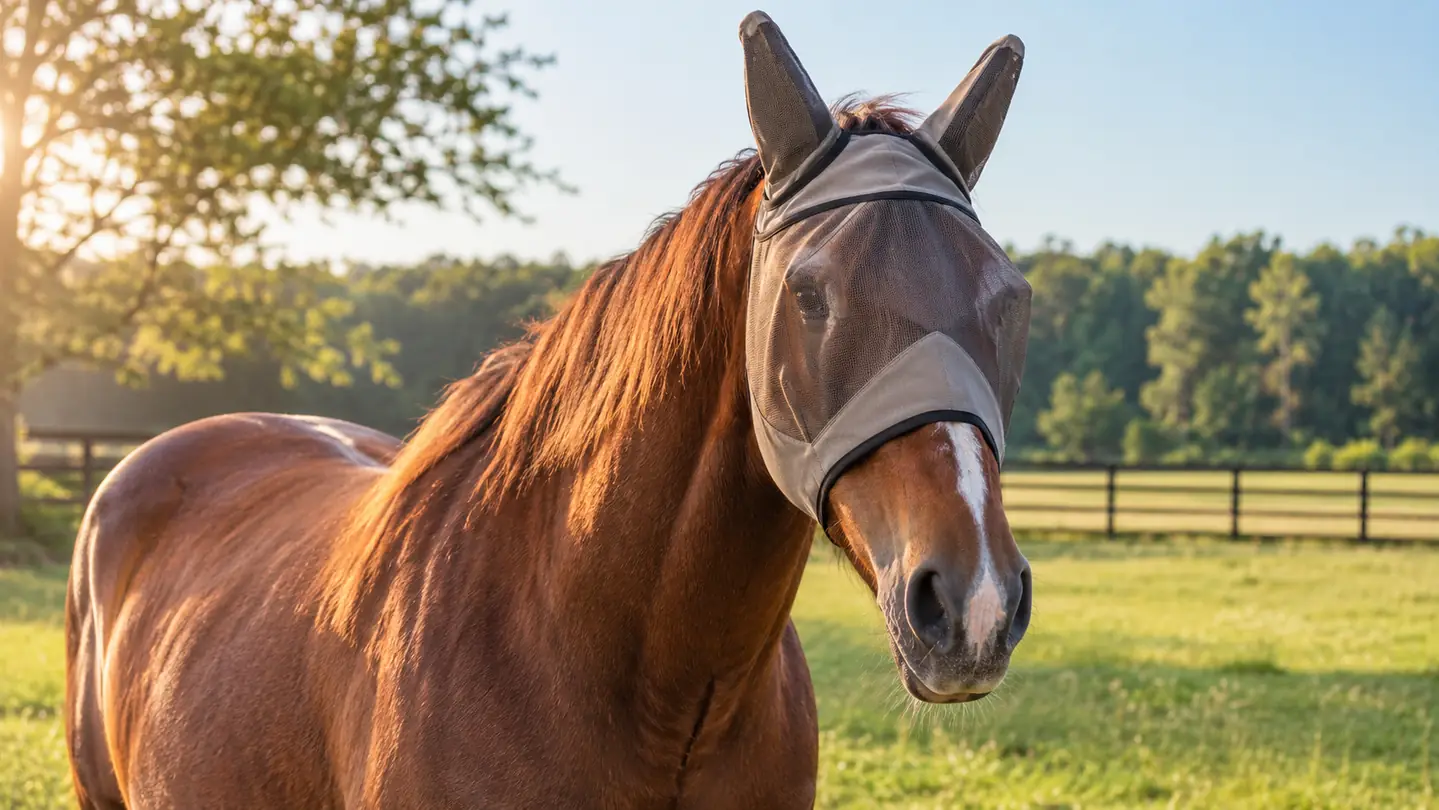
Summer in western New York means black flies in the barn aisle and deer flies on the trail. Dusty, my 14-year-old sorrel Quarter Horse gelding, starts the season the same way every year: head shaking, stomping, and rubbing his forelock bald on the gate. I tried sprays, wipes, and a feed-through supplement. Some helped for an hour. None kept the flies off his eyes for a whole afternoon. The one piece of gear that changed our summer was a fly mask, and the one that finally stayed on and fit right was the Harrison Howard CareMaster Pro.
That is not a paid endorsement. It is what happened after two summers of trying masks that rubbed, slipped, or came off in the pasture. Below are ten reasons a fly mask belongs in your summer barn bag, written for trail riders and pasture-kept horses, not show barns. At the end I will tell you what I would skip.
The Mask That Stayed on Through Turnout
The Harrison Howard CareMaster Pro has a large eye space, ear coverage, and a ventilating mesh that Dusty tolerates in July heat.
Amazon Check Today's Price on Amazon →Keeps flies out of the eyes and ears
Flies go for the corners of the eyes and the inside of the ears first. A mask with ears covers both. The large eye space on this one keeps the mesh off the eyeball itself, so Dusty is not blinking against fabric all day. That matters more than most people think. A horse that cannot see clearly will rub the mask on the fence until it comes off. I learned that the hard way the first June. I bought a cheap mask with a shallow eye cup, and inside two days Dusty had rubbed a raw spot above his eye working it against the water trough. The Harrison Howard sits further off the face, and that spot grew back in about three weeks. Now I run a thumb around the inside edge before I fasten anything.
Blocks summer sun on thin-skinned faces
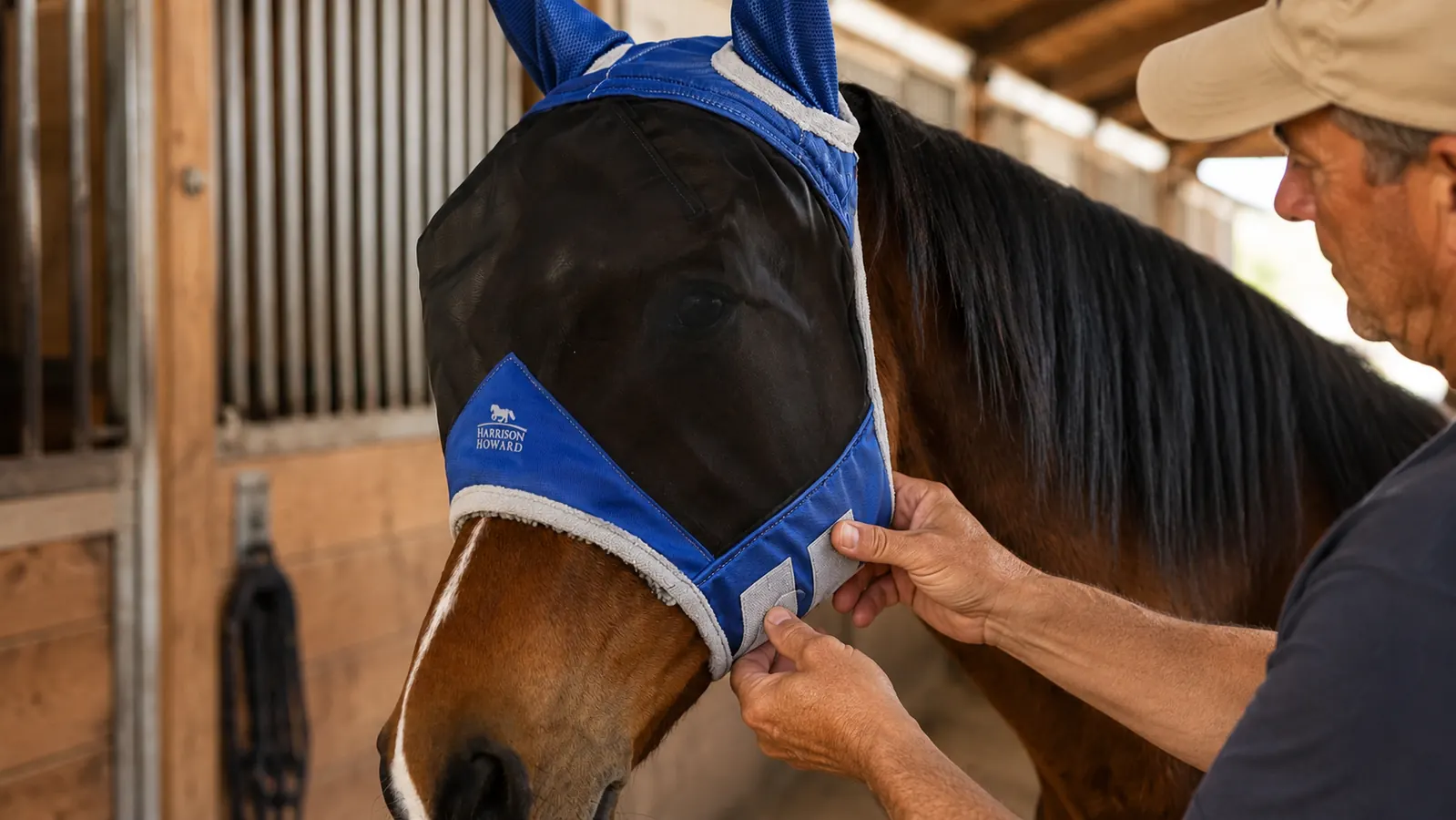
Horses with pink skin on the muzzle or around the eyes can sunburn by early June. The Harrison Howard mask uses an ultra-fine mesh with lab-tested UV protection, so it shades the face without turning the mask into a heavy hood. I still use sunscreen on Dusty's nose, but the mask takes care of the wide area around the eyes where it is hard to keep lotion on.
Stops the head shaking that wears a horse down
A horse that spends the day fighting flies is not resting. He is stomping, swishing, and shaking his head. By evening Dusty was cranky and hollow-flanked. With the mask on, he stands still in the shade. It is not a cure for every head shake, and if your horse has a medical issue you need your vet. But for plain fly irritation, the difference in his attitude was easy to see. There was a Tuesday last July I still think about. I had ridden him about four miles down the back road and turned for home, and he shook his head the whole mile back, hard enough that I got off and walked him in. This past summer we did the same loop on a hotter day and he never once threw his head.
Fewer bottles and wipes in the tack room
I still keep fly spray for the trail, but I use less of it. The mask covers the face, which is the hardest place to spray without getting it in the eyes. One mask on in the morning means fewer touch-ups at noon. That is one less thing to carry in the trailer and one less thing to forget on the tailgate.
Protects the thin hair around the eyes
The hair around a horse's eyes is short and easy to rub off. Once Dusty rubs it raw on the fence, it takes weeks to grow back. A mask is a barrier between the flies and that thin skin. The ergonomic design is meant to sit without rubbing, and on Dusty it has not left a bare patch.
The first summer Dusty wore the Harrison Howard mask, he stopped rubbing his forelock bald on the gate by the second week.
Stays on during turnout
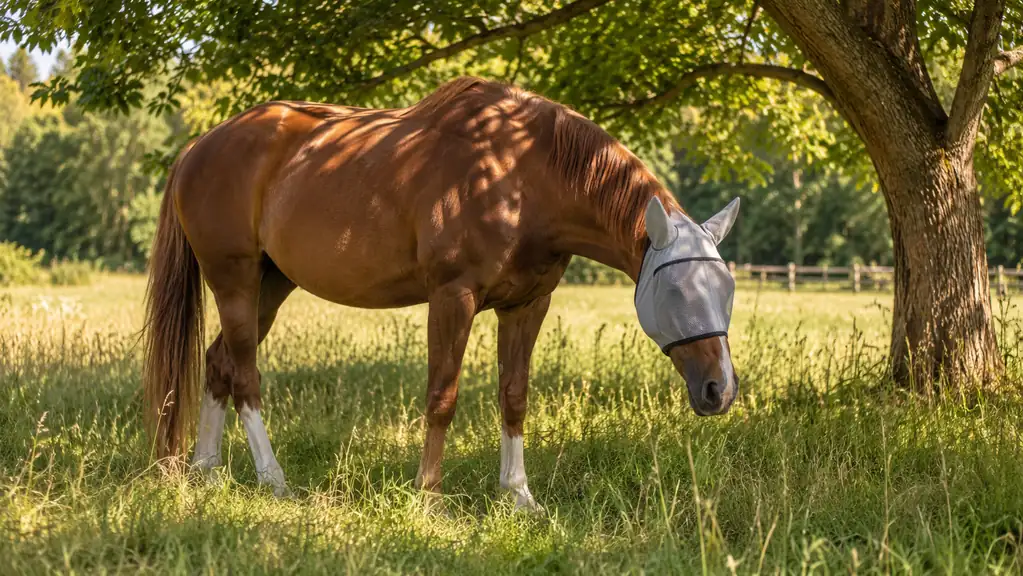
A mask is only useful if it is still on the horse. The CareMaster Pro uses secure touch-and-go closures, and the material is sturdy enough to handle daily wear. Dusty rolls, grazes, and shoves his head through the fence to visit the neighbor's gelding, which is exactly how a mask comes off. Twice last summer I found it hanging by one closure in the grass, and both times it went back on without a tear. I still walk the fence line every morning with my coffee and check the closures with two fingers, because that is just good barn routine.
Ventilating mesh for July heat
A heavy mask gets hot, and a hot horse rubs. The mesh on this one is ultra-fine and ventilating, so air moves through it. I would not leave any mask on a horse that is tied in full sun with no water, but for normal turnout the ventilating mesh has been fine. Dusty sweats under the edges on the hottest days, same as he does without it.
Made for daily wear, not just show day
Some fly masks are so thin they tear on the first fence post. This one has held up to a full season of turnout, and the listing says the long-lasting material is sturdy enough to handle wear. I have not had a seam let go. I hose it off when it gets muddy, shake it out, and hang it on a nail by the tack room door. The mesh has not stretched and the closures still grab. The only thing I have noticed is that the ear tips collect the most dirt, so I wipe those out with a damp rag about once a week.
The ear coverage makes it easier to accept
Dusty hates anything over his ears. The first mask I bought had no ear coverage, and he still got flies inside. The CareMaster Pro has ears built in, and because the mask covers them, he stopped tossing his head when I put it on. It took three days of turning him out with it before he quit trying to rub it off. Now he stands still.
One mask, fewer summer worries
I am not going to tell you a fly mask replaces your vet or your fly control program. It does not. But it removes one daily battle. Dusty keeps his mask on from morning turnout until evening feed. I do not have to wonder whether his eyes are full of flies while I am at work. That peace of mind is worth the space it takes on the tack room shelf.
What I'd Skip
I would skip the cheap masks with no ear coverage if your horse gets flies inside his ears. I would skip any mask that does not have a large eye space, because mesh pressed against the eye is a rubbing problem waiting to happen. I would also skip leaving a mask on a horse that is not used to it without checking the fit twice a day for the first week. And if your horse has an eye injury or is under treatment, talk to your vet before you put anything over his face. A mask is gear, not medicine. The other thing I would skip is buying two of anything before you know the first one fits, because a mask that does not fit your horse is just a stall decoration.
Your Horse Does Not Have to Spend Summer With His Eyes Shut
The Harrison Howard CareMaster Pro is the mask that stayed on Dusty through turnout, with ear coverage, a large eye space, and ventilating mesh.
Amazon Check Today's Price on Amazon →