
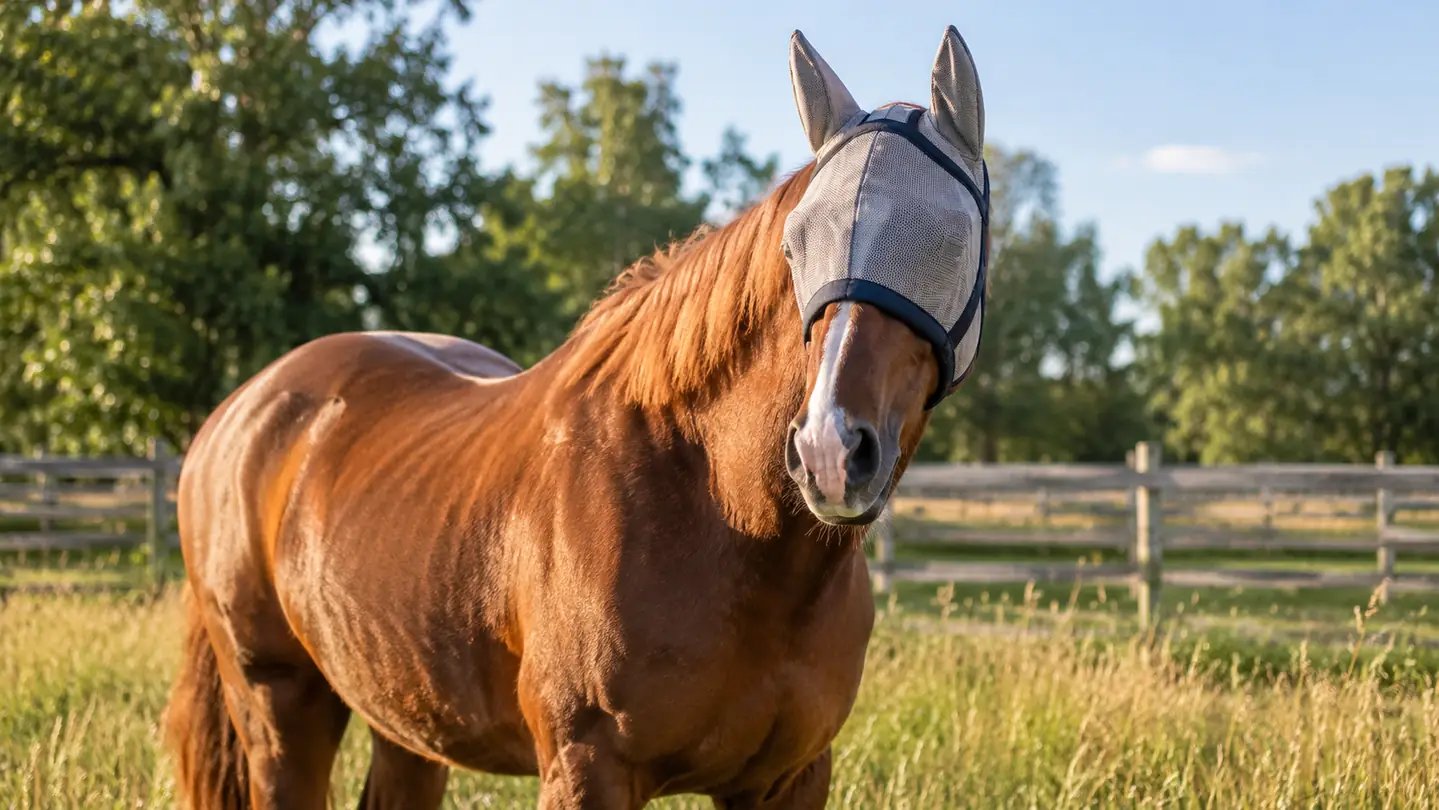
Dusty is not a dramatic horse. He is a 14-year-old sorrel Quarter Horse gelding, about 15.1 hands, and most days he would rather stand in the shade than cause a fuss. But every July the flies find his eyes, and he rubs them on the gate, the fence, his own front leg, anything he can reach.
I live on a small acreage outside a farm town in western New York and ride trails on weekends. Dusty is my one horse, steady on the trail and a little barn-sour. Two summers ago the rubbing got bad enough that the hair was gone in a ring around both eyes.
I tried a cheap fly mask from the feed store. It had no ears, the fit was loose, and by the second morning he had worked it off against the water trough. I found it in the mud and decided I was done guessing. I wanted something that covered his eyes, stayed put, and did not rub the sore places.
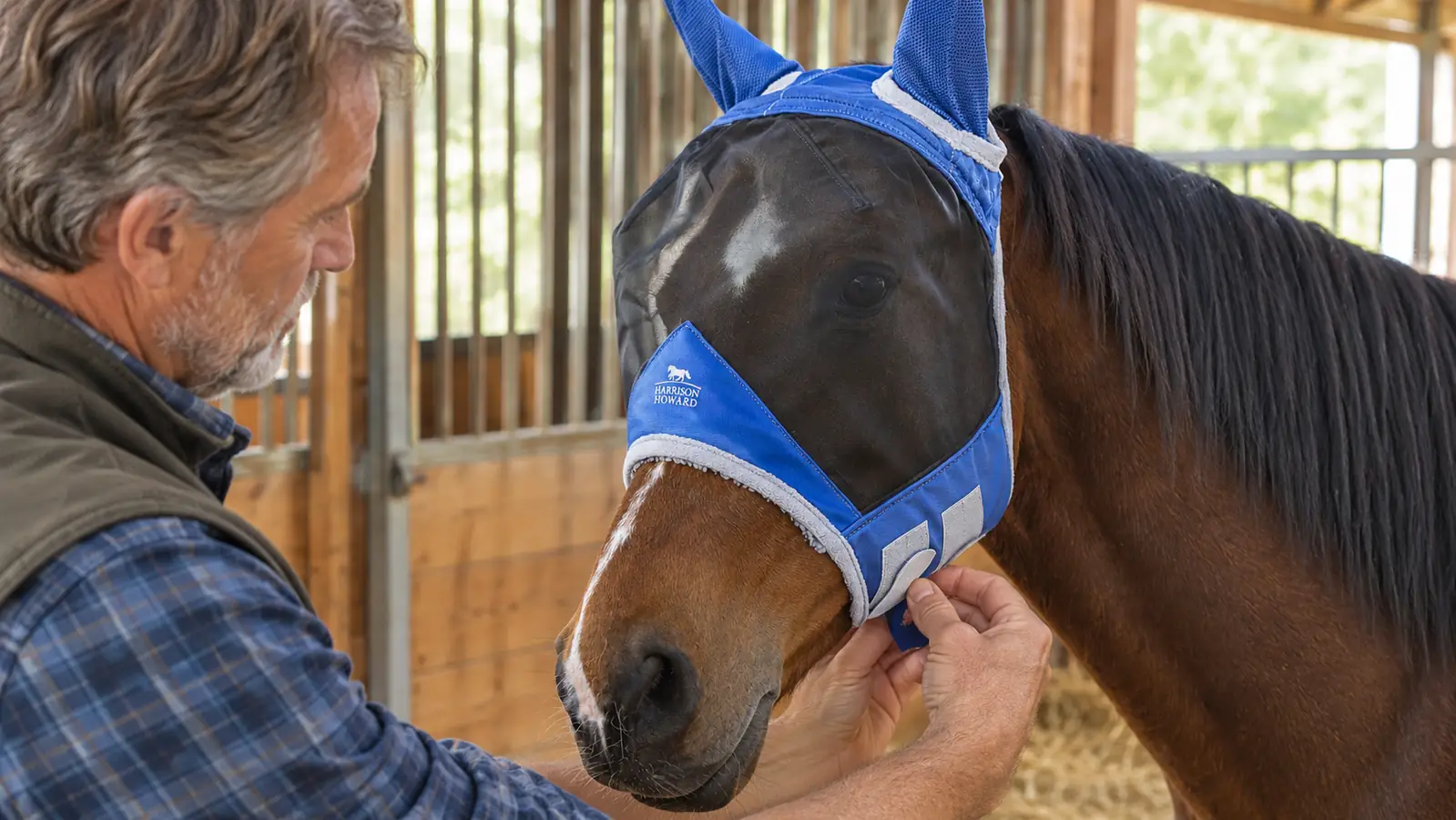
That is when I ordered the Harrison Howard CareMaster Pro Luminous fly mask in full size, with ears. I picked it because the listing talked about large eye space and ventilating mesh, and because the closures are the touch-and-go kind I already trust on turnout blankets. I did not expect it to solve everything. I did expect it to stay on.
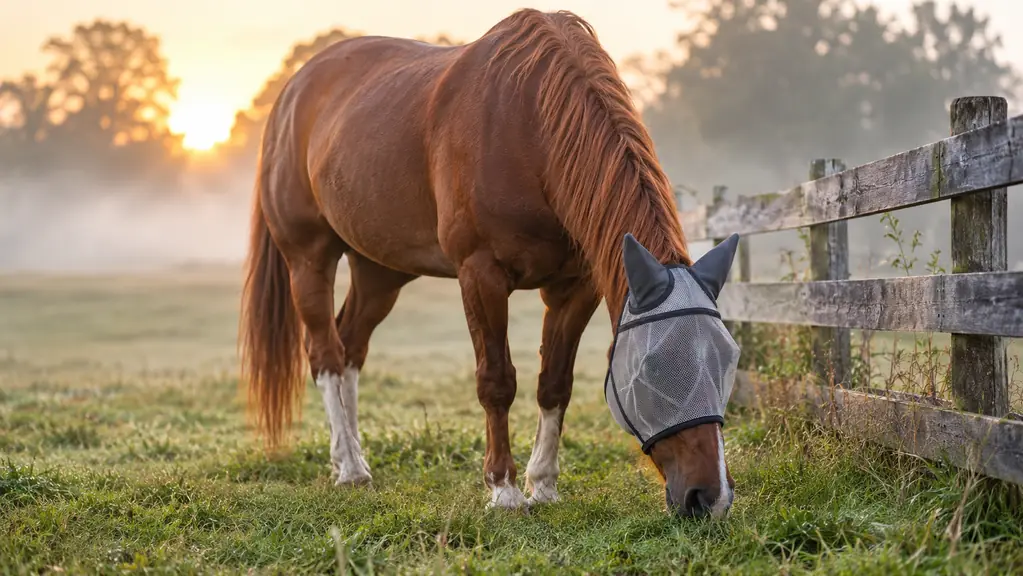
The first week was not a fair test, because it rained three days and he stood in the run-in shed like a wet wool sock. The first dry day, I turned him out with the mask on and watched from the barn door with my coffee. He walked to the round bale, shook his head twice, and went to grazing. No rubbing on the gate. No trying to peel it off with a hind hoof.
By the end of the first dry week, the bare ring around his eyes had stopped looking angry, and the mask was still on his head.
A fly mask that stays on when the flies are worst
The Harrison Howard CareMaster Pro covers the eyes and ears with ventilating mesh and touch-and-go closures. It is the mask that finally stayed on Dusty through turnout and fence rubbing.
Amazon Check Today's Price on Amazon →The fit is the part I care about most. The mask has large eye space, so his lashes are not mashed flat against the mesh, and the ears cover the places he cannot reach with his tail. The mesh is fine enough to shade his face but still moves air. On a still afternoon in August, I have put my hand under it and felt it breathe.
The closures have held through the kind of turnout that ruins cheaper masks. Dusty is a fence rubber. He will stand at the gate and work his head up and down because he thinks I am late with hay. The touch-and-go tabs have stayed where I fastened them. I still check them every morning, because that is what you do with any mask, but I have not found one loose.
What the mask does not do is replace fly spray on his body. His eyes are protected and his ears are covered, but his chest and belly still need attention. I also rinse the mask every few days in a bucket of plain water and hang it on the tack room door to dry. A dirty mask pressed against a sweaty face is not doing him any favors.
I also learned to introduce it slowly. The first time I put it on, I let him eat a handful of hay while I adjusted the tabs. I did not yank it over his ears and walk away. Ten minutes later he was back to his usual self, and by the end of the week he would drop his head when he saw me carrying it. That is not a trained response. It is a horse deciding a thing is not worth fighting.
The honest part is that this is still a fly mask. It will not fix a dusty paddock, it will not stop every fly, and a horse determined to destroy it can still find a way. I am not a vet, and I am not going to tell you it will work for every horse. I have one edge of mesh that has started to fray after two summers, and I will replace it when it goes. But the difference in his eyes is not something I have to squint to see. The hair came back. He quit rubbing. That is the whole review.
What I'd Tell You If We Were Sitting at My Kitchen Table
I would tell you to look at the eye space, the ears, and the closures before anything else. A mask that rubs or slips will end up in the mud, and you will be back where you started. The Harrison Howard CareMaster Pro got those three things right for Dusty, and that is why I keep it on the hook by the barn door.
I would also tell you that fit is not a one-time job. Dusty is 15.1 hands and wears the full size, but every horse's head is different. Put it on, watch him move, and check the tabs before you turn him out. If it shifts, fix it before he does.
I would tell you not to wait until the hair is gone. The summer Dusty rubbed himself raw, I went through more salve and fly spray than I like to remember. The feed store mask lasted two mornings. This one has lasted two summers. That is the trade I will make every time.
Give his eyes a break before the next fly hatch
If your horse rubs his face raw every summer, start with a mask that fits and stays put. The Harrison Howard CareMaster Pro is the one I reach for now.
Amazon Check Today's Price on Amazon →