
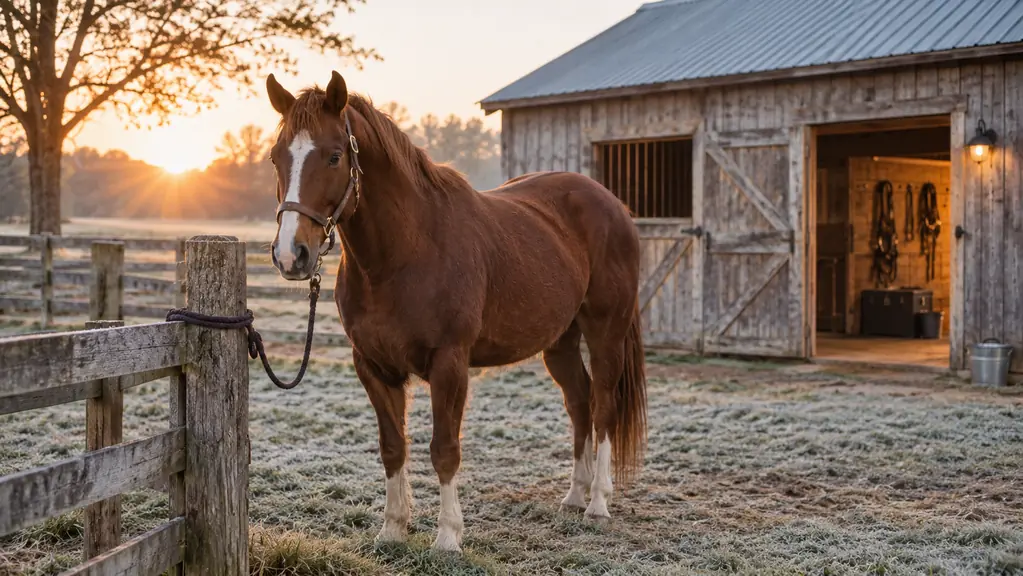
I bought the Weaver Equine Nylon Horse Halter for the most boring reason there is. Dusty's old halter had gone stiff enough that I was fighting the hardware every morning in the dark, and I wanted something I could put on a half-asleep Quarter Horse without pulling my gloves off. That is the whole story. No long search, no forty tabs open. I ordered the 1 inch average horse size, hung it on the nail by the tack room door, and used it twice a day from early spring into the fall. What follows is what I actually noticed, including the parts I did not expect and the two things that still bug me.
Here is what nobody tells you about halters, and I will say it plain. The feature a listing brags about is almost never the thing that matters. A halter is a strap, some hardware and a place for your hand. What matters is whether the strap sits where it sits without rubbing, whether the hardware opens when your fingers are cold, and whether the thing lets you lead a horse that has decided he would rather stay in the barn. Everything else is decoration. The Weaver Equine halter gets two of those three right for me. The third one depends on your horse's head, not on the halter.
The Quick Verdict
A padded nylon work halter that did its job for eight months of twice-daily use without a single rub mark. The liner is the reason to buy it. The stiff snap and the loose size ranges are the reasons to check your horse with a tape measure before you order.
Amazon Check Today's Price →The halter I reach for at 5:40 in the morning
Padded PVC coated liner, brass plated hardware, 1 inch nylon in the average horse size. It has lived on the same nail in my tack room for eight months and I have not had a reason to swap it out.
Amazon Check Today's Price on Amazon →What Nobody Tells You About a Padded Nylon Halter
Padded is a word that gets thrown around. On a lot of halters it means a thin strip of fleece wrapped around the nose and stitched down, which is fine for about a month and then collects burrs, holds water and mats into something that rubs worse than bare strap. The Weaver Equine halter is different in a way I could feel with my thumb on the first day. The liner is soft PVC coated foam rubber, and it feels closer to the inside of a decent cinch than a craft project. It sits flat against the horse and it does not shift when you pick up a foot or lead through a gate.
That liner is the whole reason I kept using it. If I am honest, I did not buy this halter expecting much. Nylon is nylon. The hardware decides whether a halter is worth keeping, and the liner decides whether your horse stops meeting you at the gate with his head turned away. Eight months in, the liner is the part that has held up best. Dusty gets rubs easily. He had a bald patch behind one ear from a cheap halter three winters back that took until June to grow in. Nothing like that has happened with this one.
The other thing nobody puts in a listing is that padding changes the fit. A padded nose takes up more room on the face, so a horse sitting between sizes may need to go down rather than up. I got lucky with the average horse size on a 15.1 hand gelding. A finer headed horse would not have been so lucky.
How I Have Actually Used It
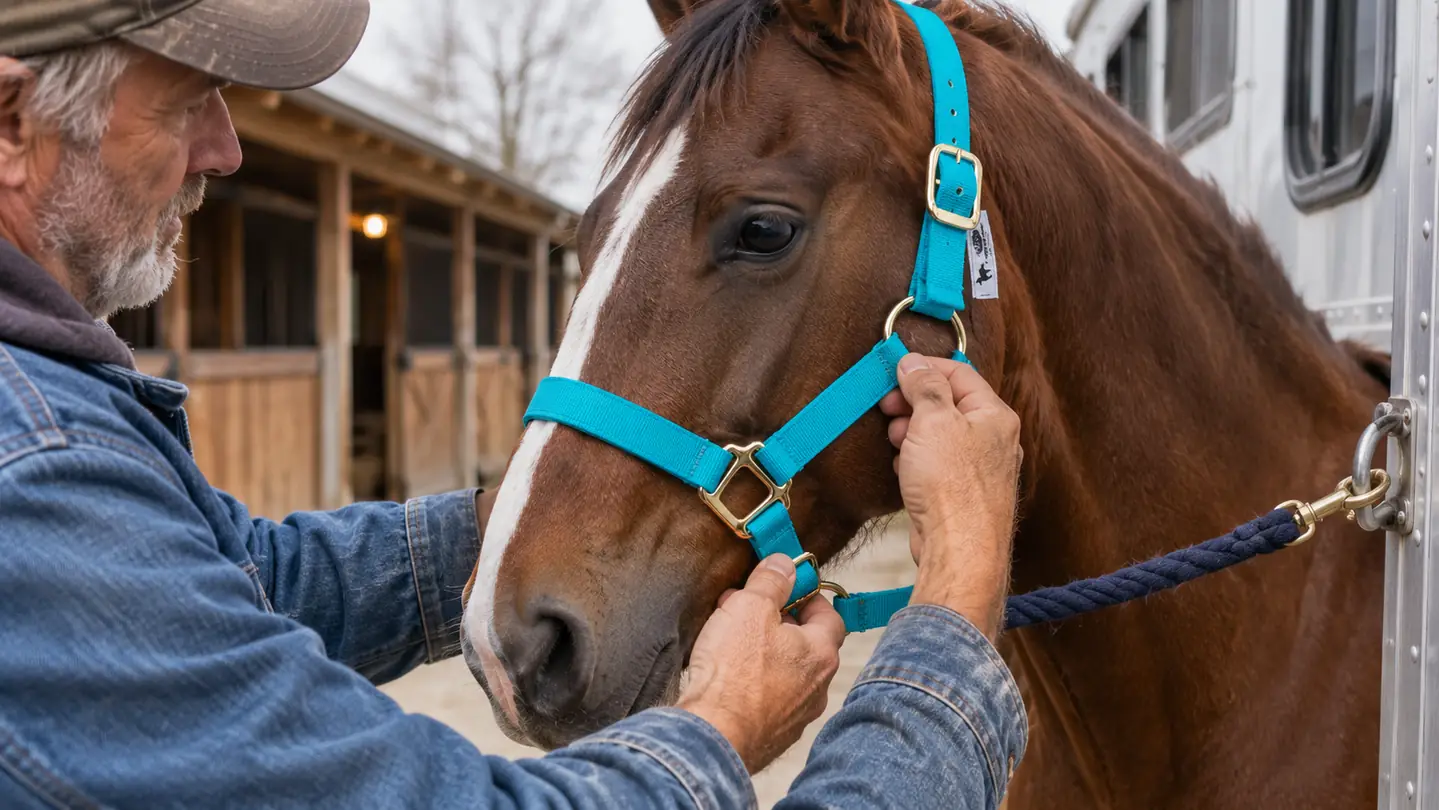
My routine is not complicated. Biscuit and I go out at 5:40, I flip the light on in the tack room, and I lift the halter off the nail. Dusty is barn sour and he is not above pretending he cannot see me, so the halter has to go on quickly and without a fuss. The snap closure is the piece I use most. For the first two weeks it was stiff enough that I had to set my thumb against it. By the end of the month it had loosened to where I can work it one handed with the lead rope already looped over my arm. That sounds small until you are doing it in the dark in February.
Weekends are trail days. I haul in a two-horse bumper-pull to the state forest an hour from the house, and the halter stays on Dusty while I unload, tie and saddle. Tying at the trailer is where a cheap halter shows itself. A horse leans back once, the hardware bends, and you spend the rest of the ride wondering whether the snap is going to let go. Dusty has set back on this one twice that I know of, both times because of another horse coming up the parking lot behind him. The halter held, the hardware did not bend, and the liner was still sitting where it started. I checked the webbing where it meets the hardware after the second time, because that is what I do. It was fine.
One morning in early June sticks with me. I had a farrier coming at seven and Dusty was in a mood, so I put the halter on him one handed while holding a coffee in the other, which I do not recommend and which I did anyway. He swung his head, the lead rope caught on the gate latch, and he set back hard enough to pop the twine. The halter took all of it. When I got him settled and looked the webbing over, the only mark was a scuff on the brass where the snap had caught the latch. That scuff is still there. It is the closest thing to a test report this halter is going to give me.
The one place I have been less than impressed is the barn aisle in mud season. The PVC coating wipes clean with a damp rag, which is genuinely better than fleece, but the foam liner still holds grit in the crease if you never take it off and rinse it. I noticed it in April after a week of rain and a week of me being lazy. Five minutes with the hose fixed it. That is not a defect, it is a maintenance note, and I would rather say it out loud than pretend the halter cleans itself.
What I Liked
- The PVC coated foam liner sits flat and has left no rub mark in eight months of twice-daily use
- Wipes clean with a damp rag instead of matting up the way fleece does
- Brass plated hardware still opens easily with cold, gloved fingers
- The snap closure breaks in nicely after a couple of weeks
- 1 inch webbing gives you something solid to hold when a horse tests you
- Adjustable enough to fit a 15.1 hand Quarter Horse with room left over
Where It Falls Short
- The snap is stiff out of the box and takes a couple of weeks to break in
- The liner traps grit in the crease if you skip rinsing it in mud season
- Padding adds bulk, so a horse between sizes may need to size down
- The 1 inch width is a lot of halter on a fine boned head
- Average horse covers a wide range, so measure instead of guessing
Eight months, twice a day, and there is still no rub mark behind Dusty's ears. That is the only test I trust anymore.
The Liner Is the Part You Notice
If you take one thing from this, take the liner. A halter's job is to sit on a horse's head for hours without becoming a problem, and the liner decides whether that happens. The PVC coated foam rubber on this one compresses just enough that the nylon never sits directly against skin, and because it is coated, dirt does not work into the foam the way it does with fleece or quilted cotton. In August I pulled it off after a long hot ride and the inside was dry. I have owned halters where the padding was soaked through by the halfway point and stayed that way.
It also does not slide. Some padded halters are built up so thickly that the whole thing walks around the horse's head while you lead, and you end up readjusting every time you catch him. This one stays put. After a full day of turn out with it on, which I do on trail weekends when I am coming back out in the afternoon, it is still where I put it that morning. I cannot say that about the last two halters I owned.
The other thing I noticed is how it dries. I rinse the halter off about once a month, more in mud season, and I hang it on the nail still damp. Fleece stays wet for a day and smells like a barn by the end of the week. This liner is dry by the next morning and it does not hold an odor. That is a small thing until you have pulled a sour smelling halter over a horse's nose at five in the morning and had him throw his head up in protest.
Fit on a Real Horse, Not a Size Chart
Dusty is a 14-year-old sorrel Quarter Horse gelding, about 15.1 hands, with a head that is honest but not refined. The average horse size in the 1 inch width went on him with room left in the adjustment, which is what I wanted. I do not like a halter set on the last notch. It means the next notch is nothing. There was enough adjustment left that I could ease it for a long trailer ride and take it back up for leading.
I ran a soft tape around Dusty's head before I ordered, mostly because I had already sent one halter back that spring. Noseband measured 25 inches, and the average size went on with room to spare on both the nose and the crown. If you are between sizes, measure the noseband at the point where your current halter actually sits, not where a sizing chart says it should sit. Where it sits is the number that matters. The chart cannot see your horse. Your tape can.
Where the size chart gets slippery is that average covers a lot of ground. A Quarter Horse head and a Thoroughbred head are both average by the listing's own description, and they are not the same shape. If your horse is fine boned or narrow through the muzzle, this halter will look and feel like more halter than he needs, and you may want to go down a size rather than trust the word average. If he is thick jawed, you may be on the last notch. Neither of those is a flaw. It is a reminder to run a soft tape around your horse's head before you order instead of guessing from a photograph.
The 1 inch width deserves its own note. On a big, plain head it looks right and it gives your hand something to hold when the horse decides he is not going through that gate. On a small head it is a lot of strap. I would not put this on a weanling and expect it to look like it belongs.
Hardware, Snap and Cold Mornings
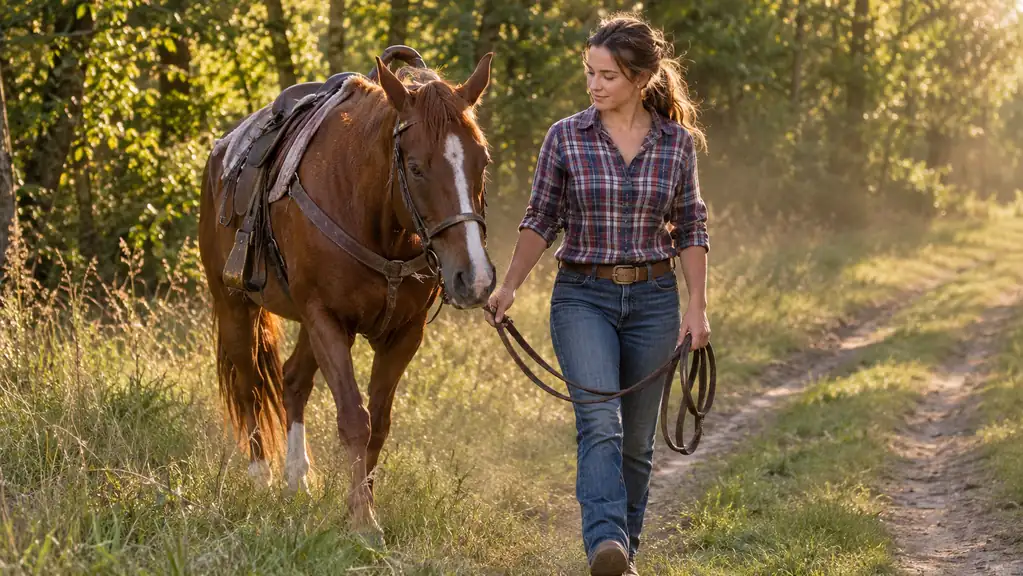
The hardware is brass plated, and that matters more than most people think. Cheap plated steel on a halter left hanging in a damp tack room will start to pit by the second season. I have a bucket of bent and pitted hardware that proves it. After eight months mine has darkened a little the way brass does, and it still opens clean. The plating will wear through eventually, that is the nature of plating, but it has not happened yet and I have not been gentle with it. I have left this halter on the trailer tie ring in the rain more than once.
The snap closure is the one piece I would change if I could. Not the design, just the break-in period. Out of the box it took real thumb pressure, and I have decent hands. Somebody with arthritis or a weaker grip would fight it for the first couple of weeks. It does loosen up. Mine is easy now. But if you are buying this for an older rider or a kid, plan on that first month, or work the snap a few dozen times before it ever goes on the horse.
January is the real test. I have gone out at five below with the wind coming across the field and worked that snap with gloves on, and it moved. Not smoothly, exactly, but it moved, and it did not freeze shut the way the old plated one used to. I keep a small rag in my coat pocket for wiping ice off the snap before I open it. That is a habit, not a requirement. The halter has never once refused to open on me in the cold.
What It Does Not Do
This is a nylon halter with a padded liner, and that is all it is. It will not teach a horse to lead, it will not stop a horse that has learned to pull back, and it is not a stand in for a rope halter when you are doing groundwork with a horse that leans on pressure. If that is the problem you are solving, a different tool is the answer. I keep a longer set of notes on how this one held up across the whole season in the long term notes here, and if you are weighing nylon against rope, that comparison is worth reading before you decide.
It also will not fix a fit problem you have not diagnosed. If your horse gets a rub from every halter he wears, the answer is usually that the halter sits too low or too loose, not that the brand is wrong. This one is more forgiving about that than bare nylon because of the liner. Forgiving is not the same as solving. Watch where it sits along the cheek and check behind the ears after the first week. If there is heat or hair missing, adjust it. Do not assume the padding will cover for a bad fit.
Who This Is For
If you keep a horse at home, ride trails on weekends, and want one halter that lives on a nail by the door and works every single day without a fuss, the Weaver Equine halter is a sensible buy. It is also a good pick if your horse is prone to rubs from bare nylon and you are tired of fleece covers that mat up and hold water. It suits a plain headed, average sized horse best, and it suits a rider who does not mind hosing the liner off once in a while.
Who Should Skip It
Skip it if you are doing groundwork on a horse that pushes into pressure, because a padded nylon halter is not built for that job. Skip it if your horse has a narrow, fine head, because the 1 inch average size will be more halter than you need. Skip it if you have grip trouble in your hands and you are not willing to break the snap in first. And skip it if you want something that looks like show tack. This is a working halter. It is meant to be handled, rinsed and hung up wet, and after a season it looks exactly like that.
One halter, one nail, eight months of mornings
A padded liner that has not rubbed a single hair, brass plated hardware that still opens with cold fingers, and 1 inch nylon that came through mud season. If your current halter has gone stiff, this is the one I would buy again.
Amazon Check Today's Price on Amazon →